Structured Authoring: What It Is and Why It Matters


If your technical writing team is drowning in inconsistent documentation, duplicated content, and endless revision cycles, you’re not alone. As content demands grow more complex—multiple products, global markets, regulatory requirements—traditional approaches simply can’t keep up.
Structured authoring offers a way out. When paired with a component content management system (CCMS), it fundamentally changes how teams create and manage technical documentation. This guide covers what you need to know to decide if it’s right for your organization.
Quick Answers: Structured Authoring FAQ
So what actually is structured authoring?
It’s a method of organizing content into a consistent format using specific rules. Instead of free-form documents, you create standardized components that can be reused across multiple publications and channels.
What does that look like in practice?
Think of a technical manual where every procedure follows the same structure: title, prerequisites, step-by-step instructions, safety warnings. That consistency isn’t accidental—it’s enforced by the system.
What tools do I need?
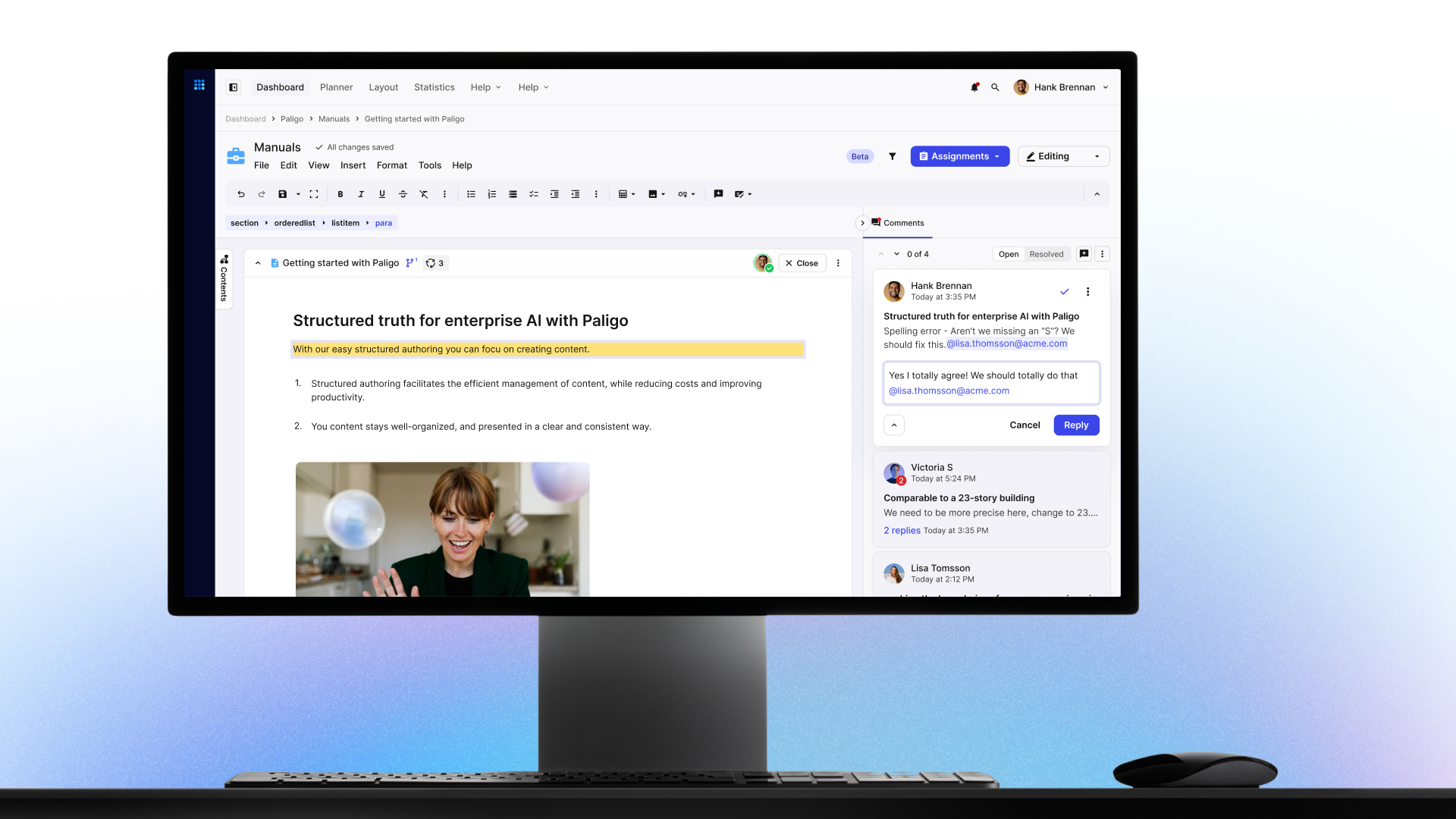
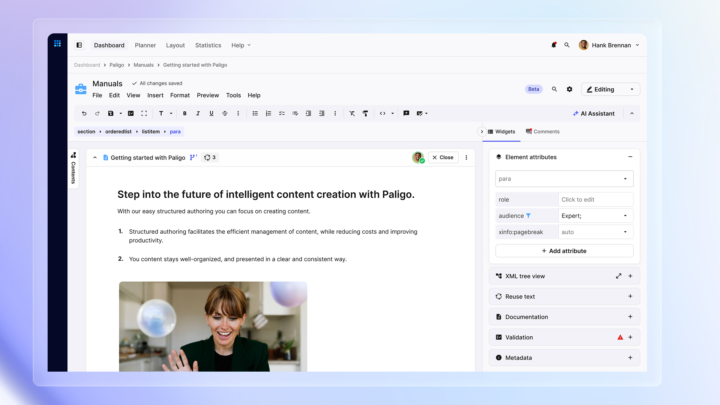
A CCMS (Component Content Management System) like Paligo handles the heavy lifting—enforcing content rules, managing reusable components, and supporting team collaboration. The system handles formatting so writers can focus on content.
Is this actually worth the effort?
For teams producing large volumes of technical documentation, yes. You’ll see reduced costs, improved consistency, easier updates, and streamlined translation. Organizations in regulated industries benefit most, where compliance and consistency aren’t optional.
What’s the difference between structured and unstructured content?
Structured content follows predefined rules—like a recipe with consistent sections for ingredients, steps, and times. Unstructured content flows freely without organizational patterns, like a Word doc you write start to finish. Technical documentation works better structured; marketing copy often works better unstructured. Check out CMS vs CCMS.
How We Got Here
Early technical writing was often chaotic—inconsistent formatting, content duplicated across documents, and version control nightmares. As companies expanded globally and regulatory requirements tightened, the old way simply broke down.
The concept of structured authoring emerged in the 1960s as a theoretical framework. It became practical in the 1990s when markup languages like XML gained traction. Today, it’s the foundation of professional technical documentation.
Three Principles That Make It Work
Content separation. Writers focus purely on the information. The system handles formatting, which means the same content can appear in a PDF manual, a web help center, or a mobile app—without manual reformatting.
Component-based architecture. Instead of creating entire documents from scratch, you work with reusable building blocks. Update a component once, and it updates everywhere that component is used. This dramatically reduces maintenance.
Rules-based frameworks. Clear guidelines ensure everyone follows the same standards. Documentation maintains quality regardless of who creates it or when—critical for teams with turnover or distributed contributors.
What Actually Changes for Your Team
Content reuse becomes real. Create content once, use it across product lines. When you update the source, every publication using that component updates automatically.
Compliance gets easier. Predefined rules ensure required elements appear in correct formats. For regulated industries, this means less audit stress and fewer compliance gaps.
Translation costs drop. Component-based content means you translate each piece once. Reused components don’t need re-translation, which adds up fast for global organizations.
Teams can work simultaneously. Clear structures let multiple authors contribute without stepping on each other. New team members get up to speed faster because the framework guides them.
Publishing to multiple channels becomes automatic. The same source content formats itself for web, PDF, mobile—no manual conversion required.
Making the Transition
Moving to structured authoring isn’t a weekend project. Success requires understanding your current situation and planning thoughtfully.
Start with what you have
Audit your existing content. Which pieces get reused (even if manually copied)? Where do inconsistencies cause problems? What’s the real cost of your current approach in time and errors? This baseline helps you measure improvement and prioritize the transition.
Define your content model early
A content model specifies how different types of content will be structured—which elements are required, how they relate to each other, what metadata you’ll track. Get this right early; it becomes the foundation for everything else.
Invest in training
Technical writers often need time to adjust. The shift from “write a document” to “create reusable components” is genuinely different. Focus training on how this approach will improve their work, not just on how to use the tools.
Choose tools that fit
Your CCMS should match your organization’s needs—ease of use for your team, integration with existing systems, room to grow. Look for version control, single-source publishing, and translation management capabilities.
The Practical Approach
For teams with an engineering mindset, here’s the systematic path:
Map your content relationships. Identify which topics appear across multiple publications. These are your reuse candidates.
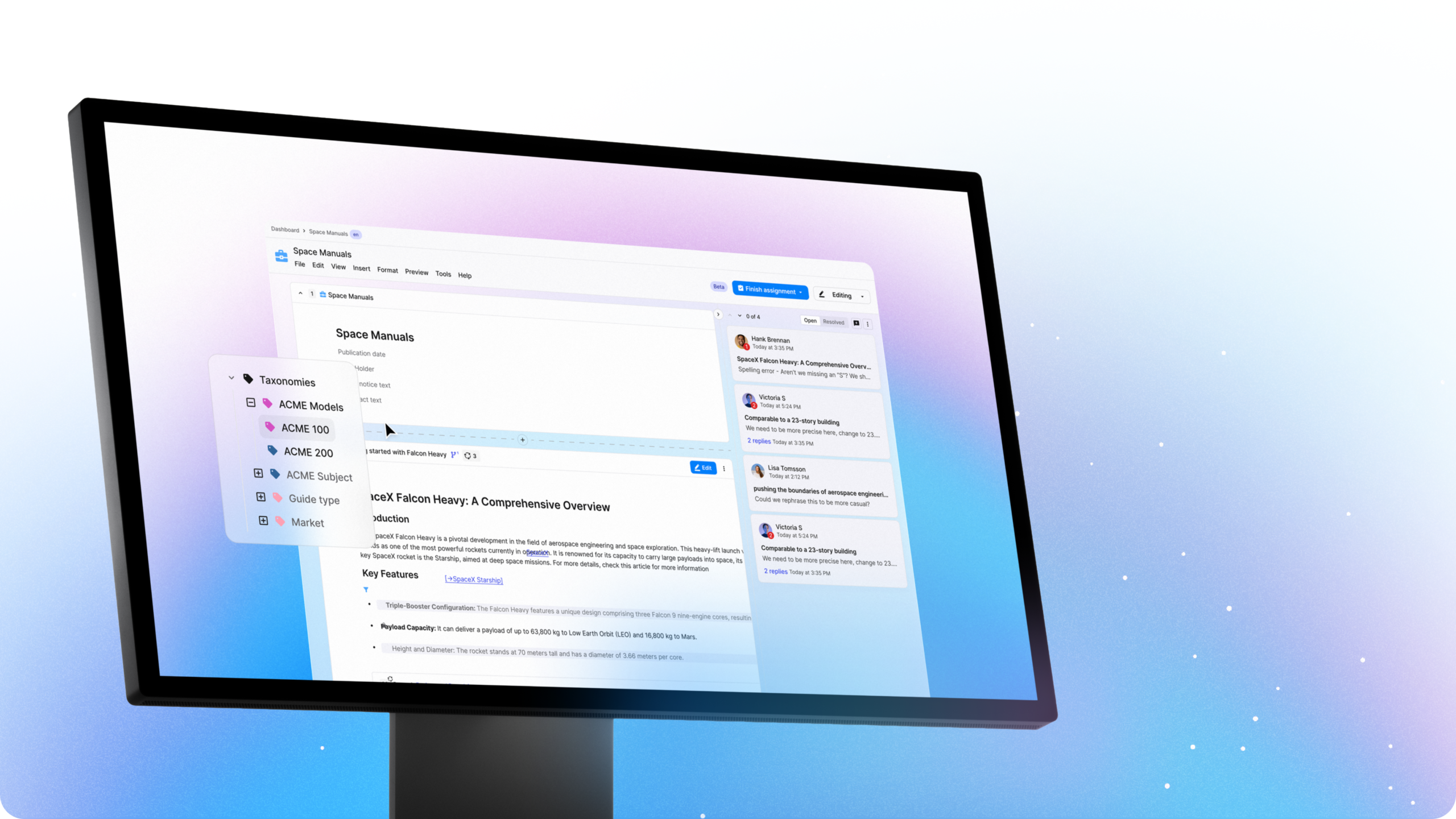
Organize for findability. Use folders and taxonomy in your CCMS so team members can locate existing content. The best component is useless if no one knows it exists.
Write for reuse. Keep topics short and specific. Use variables for information that changes (e.g., product names and specifications). Apply filters to include or exclude content based on the publication.
Assemble, don’t recreate. Build new documents by pulling in existing topics. Updates to source topics propagate everywhere automatically.
Ready to See How This Works?
Paligo CCMS provides the framework for creating, managing, and publishing structured technical documentation. It combines ease of use with the capabilities teams need to work efficiently at scale.
If the problems described here sound familiar—inconsistent docs, duplicated effort, painful updates—it might be worth exploring whether structured authoring fits your situation.
Get the Paligo Pulse once a month.
Stay ahead in structured content
Share
Author