Paligo AI Translations Enable Global Documentation at Scale

For documentation teams serving global customers, translation is often the last major bottleneck. Sending content to vendors, exporting XLIFF files, waiting for updates, and fixing structural errors can delay documentation by days or weeks.
That delay matters. When documentation lags behind product releases, global customers wait for answers.
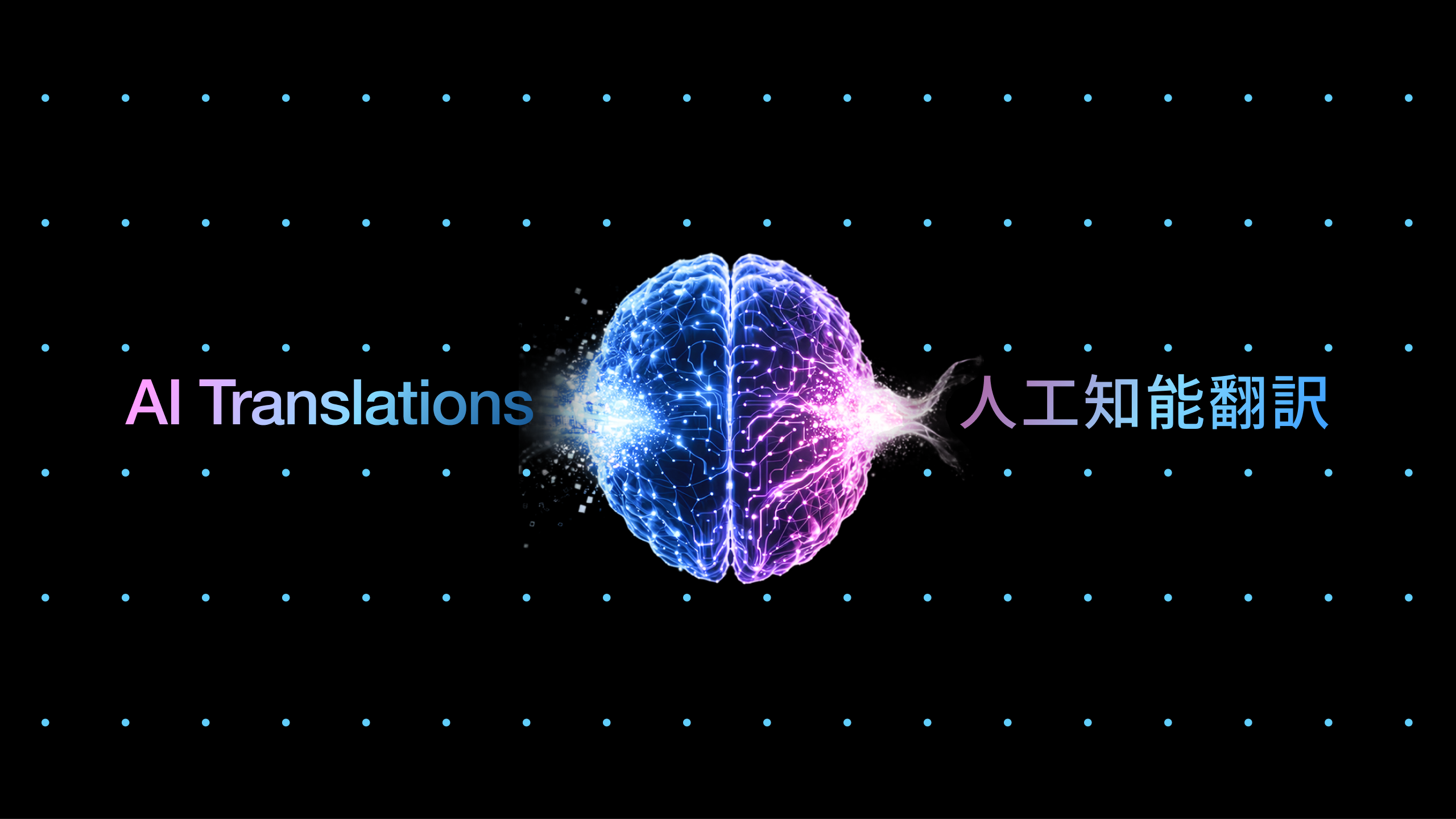
Paligo’s new AI Translations capability changes that process entirely. Instead of sending content outside the platform, documentation teams can translate topics directly inside their CCMS workflow and publish in multiple languages almost instantly.
What used to take weeks can now happen in minutes.
Why Translation Has Always Slowed Documentation
Many organizations that support a global customer base want to provide technical documentation in multiple languages, but it’s easier said than done. For most documentation teams, translation still depends on external vendors, file exports, and slow feedback loops.
First, you have to select a translation vendor and go through the process of implementing their platform into your documentation processes. Depending on how you manage your documentation today, the implementation process takes different forms.
If you use unstructured tools like MS Word or Google Docs, the translation process is completely manual. You send your documents to the vendor, and they return a translated version. If there were issues with the translation, you have to send the entire document back and request changes. If there is an update to the content, you have to send the entire document back and wait for the updated translation.
If you use a component content management system (CCMS), the integration might be seamless, or it may still require manual effort. Most organizations export their documentation as XLIFF, send it to the vendor for translation, and then import the translations back into the CCMS. This export/import process takes time, and errors often happen, such as broken XML structure, lost metadata, and versioning mistakes.
All of these challenges result in delays in properly translating the content and getting the translations into your CCMS. They also increase translation costs, not only from the translation vendor but also from the extra work your authors or translation managers do to ensure the translations are properly entered into the system and reviewed.
Paligo AI Translations: A Modern Approach
Paligo’s AI Translations turns translation into a native step in the documentation workflow. The new AI Translation enables you to translate content within your Paligo documentation workflows and release it simultaneously in multiple languages. No more copy and paste. No more exporting and importing XLIFF files.
For technical writers and collaborators, this means less work managing the translation process and faster, more efficient translations. For translation reviewers, it’s easier to review translations and make changes. And for documentation team managers, it means cost savings and a faster time to market for your documentation.
AI Translations enable a smooth, fast translation experience, allowing organizations to scale globally without the traditional bottlenecks of working with translation vendors or relying on manual translations. It’s about cost savings, productivity improvements, and faster time to market for your products with multi-lingual documentation.
Let’s take a look at how Paligo’s new AI Translations works.
How AI Translations Works Inside the Paligo Workflow
With AI Translations, Paligo makes translation native to the documentation workflow and is designed to be easy to use. There is nothing you need to do. Using an industry-leading third-party AI translation service, Paligo automatically translates content within your workflow. All you have to do is select the content to translate and indicate the languages you want it translated into. Currently, Paligo supports over 30 languages, with more on the way.
When you select the content to translate and the languages, Paligo analyzes the content size and provides a cost estimate before the translation is performed. If you approve the cost, you select to do the translation, and the content is translated and added.
Built-in Control With Glossary and Human Review
The translation facilitates machine translation post-editing (MTPE) by allowing “human-in-the-loop” review and approval directly within Paligo. The AI Translation service translates the selected content, and an author or contributor can then review the translation and make any necessary changes to ensure it’s accurate and on-brand. External specialists can also be invited to review translated content (e.g., translation vendor). Once approved, the translated content is now ready to publish.
Paligo creates an audit trail for all translated content, and you can download a translation usage .csv report from the Translations Dashboard to view in Excel.
Another key feature of AI Translations is the Glossary. The Glossary is designed to enable consistent memory used by translation providers in that it provides specific rules for translating words or phrases based on industry or organization-specific terminology.
We’ve looked at how AI Translations work. Now, let’s talk about the costs.

What This Changes for Documentation Teams
We talked about how AI Translations work compared to traditional translation vendors. Here’s why Paligo’s approach is better.
Manual Friction is Eliminated
When documentation teams have to manage translations through copying and pasting, it’s easy to make mistakes or miss things. For those with a proper translation process set up in Paligo, they often export XML or XLIFF files, send them to a translation provider, and then re-import the translations. This process is still very manual, and it’s where version control usually breaks down.
With AI Translations, all this manual copy/paste, export/import is eliminated. Translation occurs within the content-creation workflow in Paligo. Authors don’t have to touch the content to send it for translation. Versioning is carefully controlled by Paligo, and complete audit trails show documentation teams what content is translated and when.
Modular Efficiency Means Faster Translations
Efficient content processes are something every documentation team wants. They need to publish content within critical timelines, either for new product releases, critical product updates, or to meet service-level agreements with customers. This is why structured authoring and content reuse are so important, including for translation management.
When you have to send all your content to a translation provider at once, wait for it all to come back translated, and then properly get that translation back into the system, significant time can pass.
With AI Translations, the process of translating content changes. Because Paligo uses structured, topic-based content, translations can happen incrementally. Teams no longer have to send entire documents for translation. Individual topics can be translated as soon as they are approved.
Have a topic written and approved? Send it for translation. Have a couple more ready? Send those for translation. As each translated topic comes back, a translation reviewer (an author or contributor) can review it, edit and approve it. This iterative review approach leads to faster translation reviews and overall translation. It also ensures version control is properly applied.
Cost Comparison: AI vs Traditional Translation
Traditional translation providers charge between $0.05 and 0.30 per word as a baseline. Translations are typically billed per word with three levels of rates:
Exact matches (free to a few cents per word)
Fuzzy matches (0.05 – .015 per word
No match/new word matches (0.25-.30 per word)
When you use AI Translations with a human reviewer, you can reduce translation costs by 30-80% compared to working with a traditional translation provider. If you have no human review (i.e., use raw AI translations), those savings can exceed 95%.
If you opt for AI Translation without MTPE, rates can be lower depending on the nature of the content and alignment with the Glossary.
Why would you not do a human review? For some companies, speed to market is prioritized over complete accuracy in translations. The idea is that they can publish documentation faster while still fixing mistakes with user feedback.
Paligo AI Translations uses a token-based model (1 token = 1 character). Customers purchase prepaid token packages (e.g., a small package is $50 per 1 million characters) that scale to support different translation requirements. New customers receive a free trial of 1 million characters.
Let’s put this into perspective.
An administration guide typically ranges from 160,000 to 170,000 words, or 400-600 pages (assuming 325 words per page). If we assume six characters per word for technical content, then 1 million characters equate to 166,000 words. So, using AI Translations, you would pay roughly $50 for an Admin guide using this model. Technical documentation tends to skew towards higher characters per word due to product names, command syntax, longer compound terms, and URLs/file paths.
Whether you use pure AI Translation or AI Translation with review, the costs are still significantly lower than using a translation vendor.
Here are those translation costs again:
| Workflow Type | Estimated Cost (Per Word) |
Potential Savings | Best For… |
|---|---|---|---|
| Traditional (100% Human) | $0.15 – $0.30 | 0% (Baseline) | High-stakes legal, creative marketing, literature. |
| Full Post-Editing (MTPE) | $0.08 – $0.15 | 30% – 50% | Customer-facing web content, technical manuals. |
| Light Post-Editing | $0.03 – $0.08 | 60% – 80% | Internal docs, FAQs, high-volume help centers. |
| Raw AI (No Human) | <$0.01 | >95% | Low-risk content, user reviews, instant chat. |
Other factors that can increase cost savings include:
- Language pairs. Common language pairs (eg, English to Spanish) have higher AI translation accuracy, while rare pairs (e.g., English to Icelandic) require more human editing. Using the Glossary to match languages can help improve translation accuracy for less-common language pairs.
- KISS rule. KISS, or “keep it simple, silly,” means you write content in simple words and sentences. This isn’t always possible with technical documentation, but it is a common recommendation in all writing to ensure the content is easy for users to understand.
AI translation savings will never be 100% when there is a human-in-the-loop, because human review isn’t just a quick look. It’s a person who takes the time to ensure the content is accurate and on brand, which means you get:
- Contextual accuracy. AI often misses nuances or hallucinates terminology that doesn’t fit the industry
- On brand content. AI can be “bland” – humans inject brand tone of voice
- Responsible translation. For legal or medical content, humans take responsibility for accuracy and therefore take the time to review the translations properly.
Paligo’s AI Translations Compared to Other CCMS Vendors
Other CCMS providers offer AI translation capabilities, but what sets Paligo apart is how these capabilities are implemented in the platform. AI translations are tightly integrated into the documentation workflow; there’s no need to create a separate process to manage translations or go outside the platform.
Cost estimates are another important difference. Instead of finding out how much a translation costs after it’s completed, Paligo provides authors with an estimate up front so they know how much they are spending and can make appropriate decisions. And because translations are applied using tokens, documentation managers can more effectively track token usage and budget appropriately.
For customers who worry that AI translations are risky due to hallucinations and accuracy issues, both the Glossary and MTPE features provide more fine-tuned control. The Glossary helps the AI translate keywords and terms properly, while MTPE enables a human-in-the-loop by allowing humans to review and edit machine translations directly in Paligo to correct mistakes or ensure brand voice is applied.
When you are looking at AI translations from a CCMS provider, it’s important to understand exactly how the process works and if it provides the control you need to have confidence in the translation capability.
The CCMS Becomes a Global Distribution Engine
For many documentation teams, translation has always been a bottleneck. Content is written quickly, but global publishing slows down while teams wait for external vendors, manage XLIFF files, and resolve formatting issues.
AI Translations inside Paligo CCMS change that dynamic.
Instead of sending documentation off-platform, translation becomes part of the content workflow itself. Topics are translated as they are written, reviewed by human editors when needed, and published in multiple languages without breaking structure or version control.
The result is faster documentation releases, lower translation costs, and a workflow that scales as products and global audiences grow.
This is where the modern CCMS goes next. Not just managing documentation, but powering global content distribution.
Get started with Paligo
Paligo is built to meet the most demanding requirements, with plans made for any company from the growing SMB to the large Enterprise.
Stay ahead in structured content
Get the Paligo Pulse once a month.

Share
Author