How Duda Simplified Multi-Support Portal Documentation with Paligo CCMS

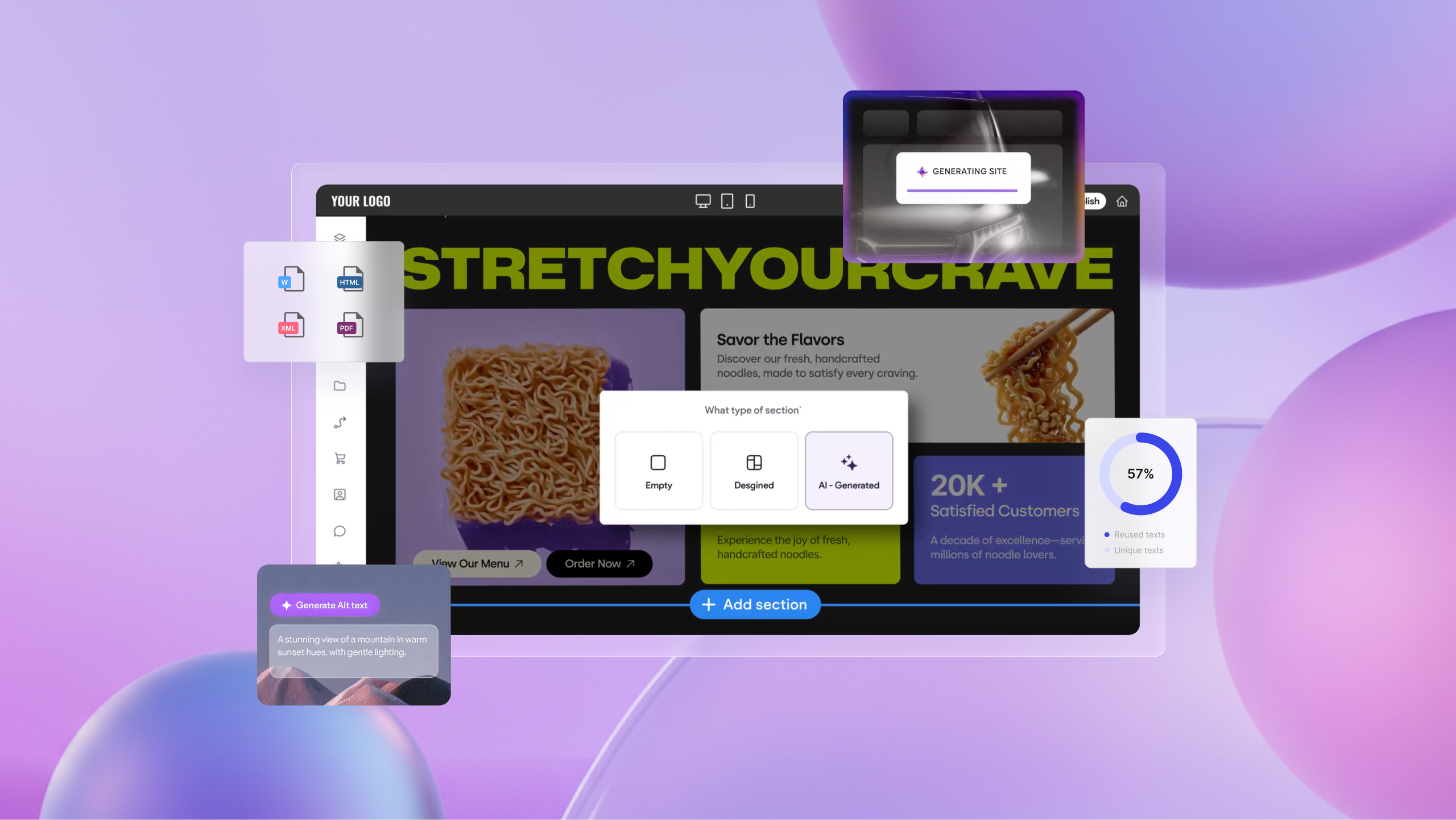
Duda is a leading white label web building platform for digital agencies, SaaS platforms, and web professionals offering web design services to SMBs. From its industry-leading AI Assistant to advanced API-driven automation workflows, Duda offers web professionals a comprehensive suite of tools to build pixel-perfect, feature-rich websites efficiently and at scale–all on a flexible platform that can be fully customized to match their go-to-market strategy and ideal customer experience.
As the top platform for Core Web Vitals, a critical metric for SEO performance, Duda makes it easy for web professionals to deliver a superior digital presence and outstanding performance to their customers under their own brand. More than 20,000 organizations have trusted Duda to build 1 million active websites and counting.
Part of Duda’s offering is a technical documentation support portal delivered via Zendesk. Duda offers its own branded support portal, a white label support portal, and five custom support portals for larger SaaS companies. Managing these portals is an important part of Duda’s service offering, and they needed an easy way to do so with a small team.
Brenna Jacobson is a Senior Technical Writer for Duda. She handles all technical support documentation for the company, except API documentation. When she started with Duda five years ago, the team had just moved from manually updating the portals to using MadCap Flare. But challenges with Flare prompted the company to seek an alternative solution.
The Challenges with Using Flare
There were several key challenges to Duda’s existing tech docs environment. First, they were having stability and reliability issues with Flare. Flare had to reconnect with Zendesk each time an update to the portal needed to be made, and the connection would often break. The last time it broke, the problem lasted for almost a month, and Jacobson couldn’t make updates to the support portals. With five custom portals that they were required to update monthly as part of their service offering, this caused issues for customers.
The Duda team was also using the desktop version of Flare, which required downloading files to local machines to make changes. Storing files like this created a big risk for the team, because if something happened to the local computer, significant data would be lost.
Jacobson said that as a team of one, they needed an approachable alternative to Flare that didn’t have a steep learning curve in the event that a non-technical writer needs to make documentation updates. It also needed to be cloud-based to avoid the desktop challenges they had faced.
We needed a system where we could have a backup in there, so that if for any reason, I need to be out, someone can come in and do base level maintenance, a few updates, and keep things running without requiring them to have expert level knowledge of the platform.
From Flare to Paligo CCMS in Three Months
With three months left in their Flare contract, Duda set out to find a new solution. They looked at a number of solutions, including Document 360 and Author-It, Adobe Robohelp and Framemaker, and Paligo (a platform some of her professional acquaintances were using).
Duda quickly knew that the first two didn’t meet their requirements. They also found that RoboHelp and Framemaker offered much more than they needed. In the end, Paligo offered the right combination of features: depth of content reuse, cloud-based, easy to use, and at the best price.
With a tight timeline, Duda worked closely with the Paligo team to get set up and content migrated.
We met with Mike once or twice a week for a couple of weeks, and each week, we told him what we were trying to set up, what we were trying to accomplish, and he would double-check our work and suggest better ways of doing things. Especially with the content reuse. We were already using that in a very small way in Flare. We just hadn’t fully explored it. And we were using this opportunity when we were migrating our articles to revamp some of them, and remove outdated ones. We used it as an opportunity to conduct an audit. And so Mike really helped us see how far content reuse could go.
The migration happened in two ways. First, low-touch, low-view articles were migrated directly using a migration tool. For the high-touch articles, Jacobson refreshed them and then manually migrated them, restructuring them as she went. Migrating in this manner allowed Jacobson to document everything, build the reuse strategy correctly, and create reusable components and naming conventions.
An Improved Approach to Managing Documentation with Paligo
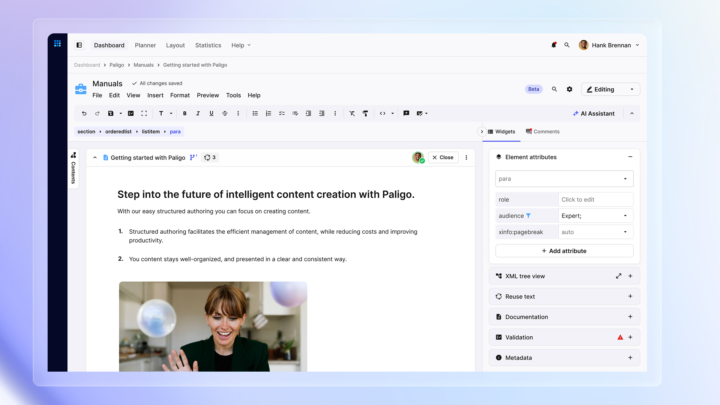
Within less than three months, Duda had fully switched to Paligo CCMS and was using it regularly to create and edit content. Jacobson noted content reuse as one of her favorite features, and she uses variables and audience tags to create reusable content across all seven portals. She’s also beta-testing Paligo’s new AI translation feature, as Duda plans to replace its current translation provider integration in the near future.
Currently, Jacobson uses the HTML-to-Zendesk multi-select publishing channel, which allows her to quickly select content to publish to one or more Zendesk support portals at once. When she published with Flare, Jacobson had to publish all the articles each time, taking 30-40 minutes per publishing run. With Paligo, Jacobson only needs to publish what has changed.
It’s amazing because it used to be, I’d say, okay, I’ll queue up all the changes. I’ll publish on a Friday. But now it’s super easy. Someone in support says, Hey, I see this one outdated thing. Go fix this one bullet point, and boom, I can handle it all in like five minutes.
There have also been occasions when Jacobson had to publish support content as PDF documents for some of Duda’s SaaS clients, and she uses the PDF publishing channel out of the box.
Today, Duda has over 575 topics and 300 articles in Paligo, with 10-15% reuse. Some product documentation has reuse rates of 30-40%, while others have lower reuse rates. Publishing time has reduced significantly, with only updates needing to be published, not entire articles.
Writing with a Reuse Mindset
Jacobson said there is a learning curve to content reuse, but it’s worth it because it saves a lot of time in the long run. She gave the example of a product team that redid a core part of Duda’s product, requiring every procedure in the documentation to be updated. Because she had set up reuse and variables, she was able to make all the required changes in an hour. Everyone in the company was amazed.
The thing with content reuse is you do have to think big picture. And that’s where Mike was really helpful as we were creating these reusable components. He encouraged us to think bigger. He’s like, don’t just make this one procedure reusable. You could make the paragraph, the procedure, and the image, and you’re set. So it requires advanced planning, but it’s totally worth it, and will save you a lot of time in the long run.
Advice for Others Looking at Paligo CCMS
When asked for advice to others considering Paligo CCMS, Jacobson said she would ask them several questions.
I would ask them about where they’re publishing to, because Paligo offers a good range of integrations. I would ask what integrations they want. Do they need translation? Obviously, at this point, I can’t speak to translation quality, but I do like that Paligo is now offering AI translations in the product. I would definitely ask them about content reuse. I’d ask, how many people are on their team? Because even though we don’t use the review workflow, we tested it, and it was pretty easy and nice.” Paligo provides all these things, making it easy to create and manage documentation.
I also want to shout out the Paligo team. We choose to renew because Paligo is really helpful and responsive. I mean, fortunately, I haven’t had to create many support tickets, but when I do, they’re on it. So we really appreciate that. We appreciate our onboarding team. Dominic is always very quick to respond to emails about literally anything, so that’s always nice. Yes, we love the product. Love the team.