
The shift to fully structured content
A move to structured content isn’t just a tooling swap – it changes how your team works:
From documents to topics
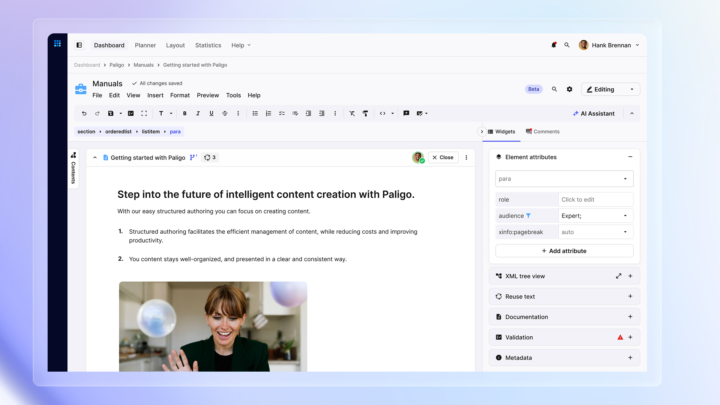
Writers create modular topics and components that can be assembled into many different publications, not one monolithic file per output.
From layout to semantics
Content is tagged with meaning (e.g. procedure, warning) instead of manually styled for each channel, making it easier to validate, reuse, and optimize for search and AI.
From local files to a shared CCMS
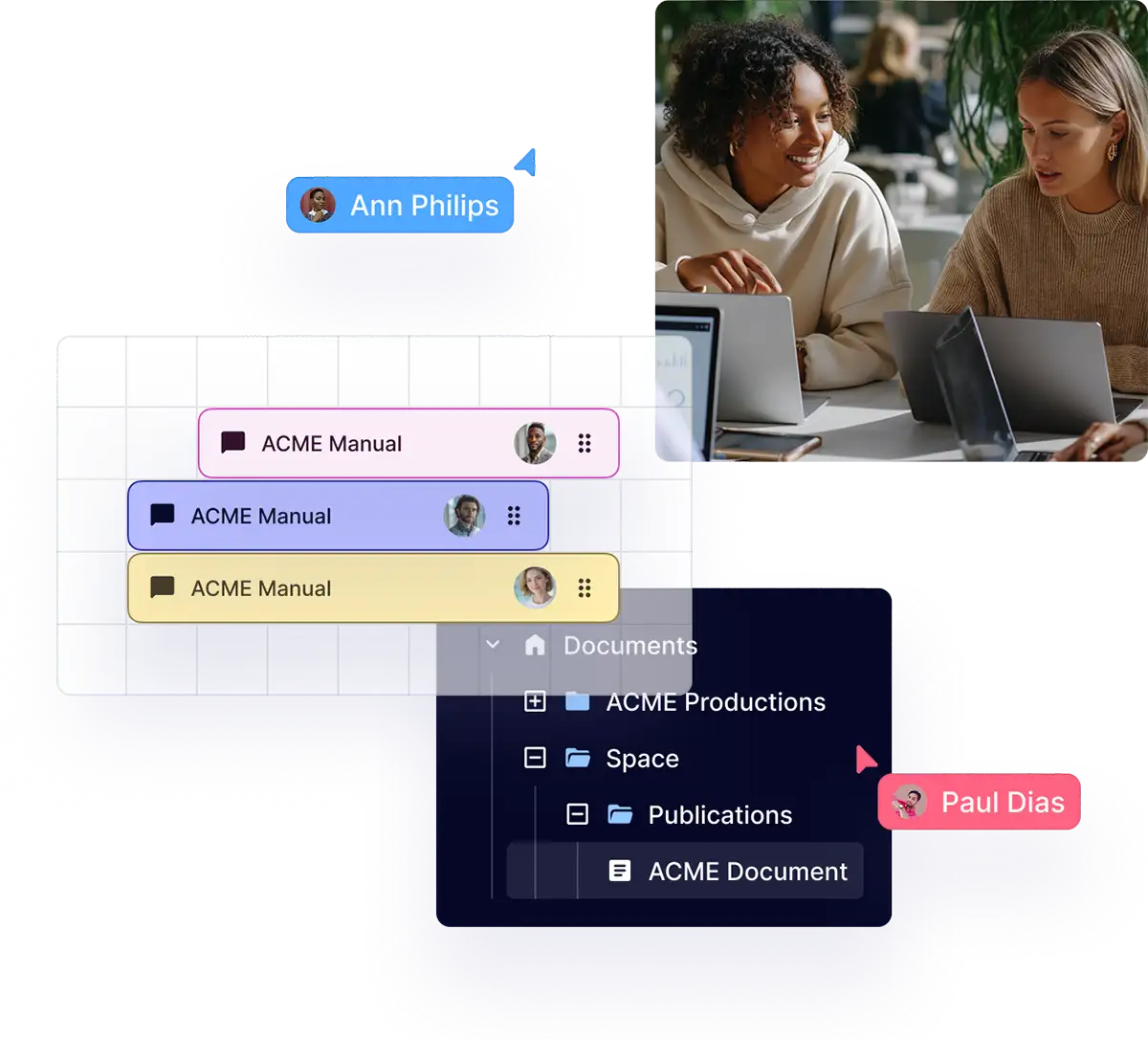
Content lives in a central, versioned repository with collaboration workflows, branching, and multichannel publishing, built in.
From guesswork to governed content
Taxonomies, metadata, and templates create guardrails so every technical writer produces content that fits your model from day one.
There’s a proven alternative
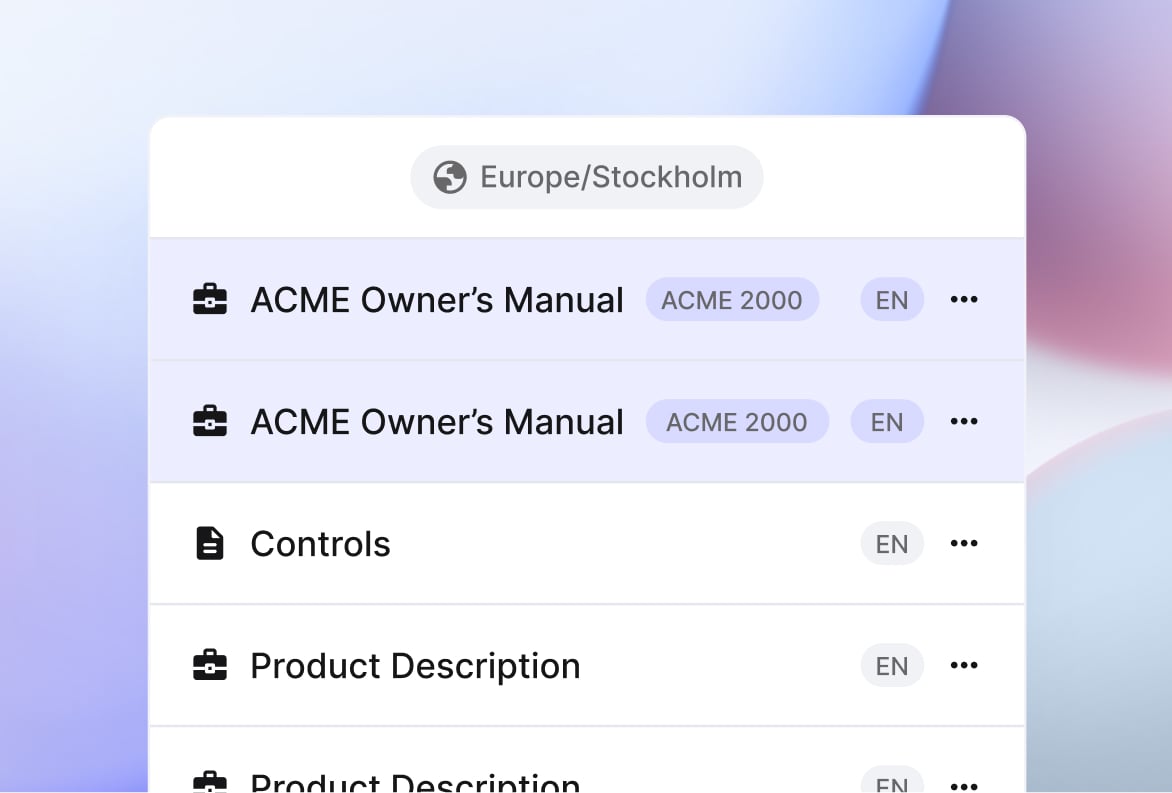
Teams switching to Paligo consistently save time, reduce duplication, and streamline localization. And the migration? It’s structured, supported, and designed to help you keep what works while improving what doesn’t.

We have reduced our publication time by 95%. We have reduced our translation costs by 75%, and it now takes 90 seconds to publish 15 languages of the user guide and post them for distribution.
Bonnie Swanson, Technical Communications Manager, Proscia