
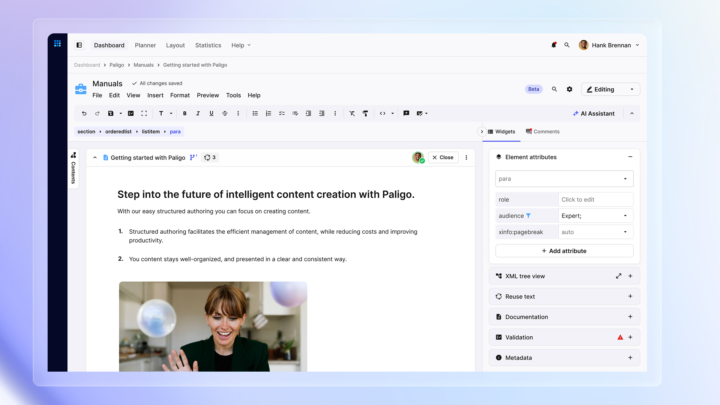
What working with a CCMS actually feels like
A modern CCMS makes documentation governable instead of a tangle of files and folders. Typical Paligo workflow:
01
Write once:
Content creators write modular topics in an XML-based editor that guides structure without getting in their way.
02
Collaborate in one place:
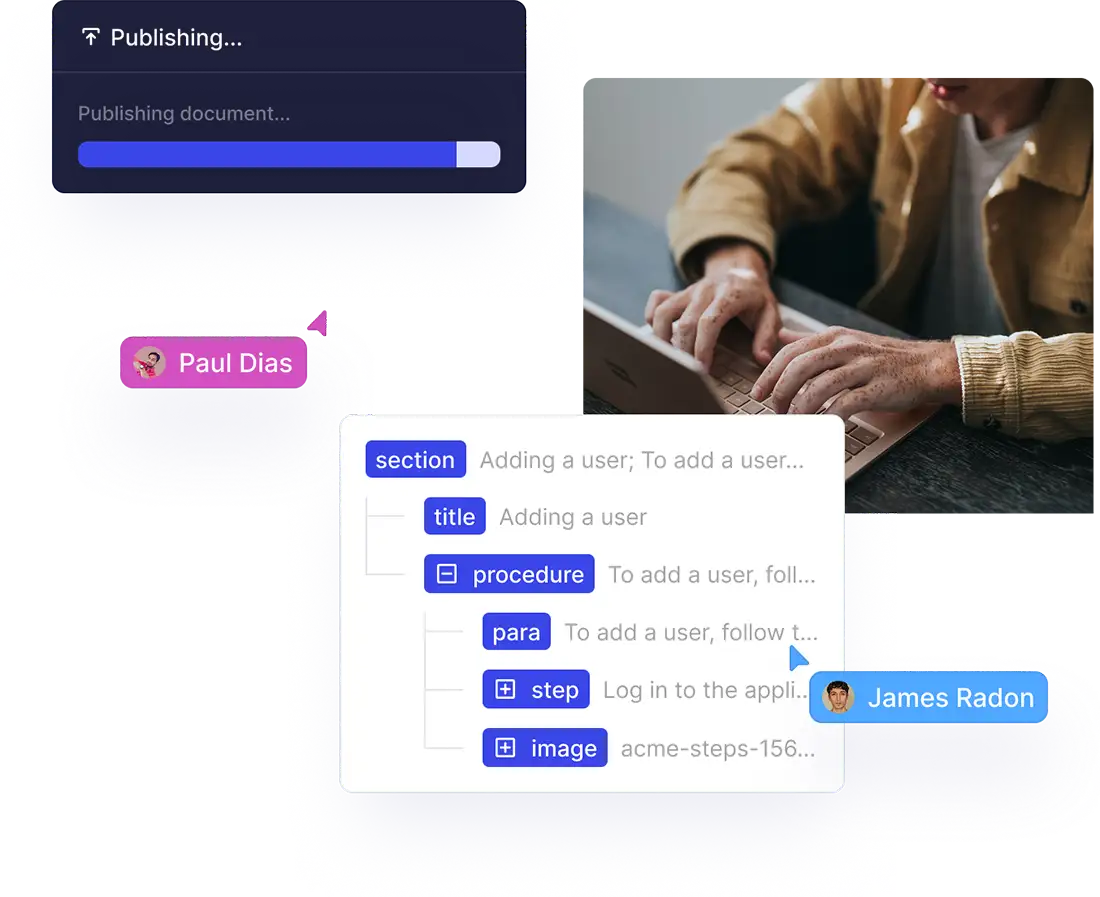
SMEs, reviewers, and translators work in the same environment with comments, assignments, and tracked changes instead of email threads.
03
Manage versions and variants:
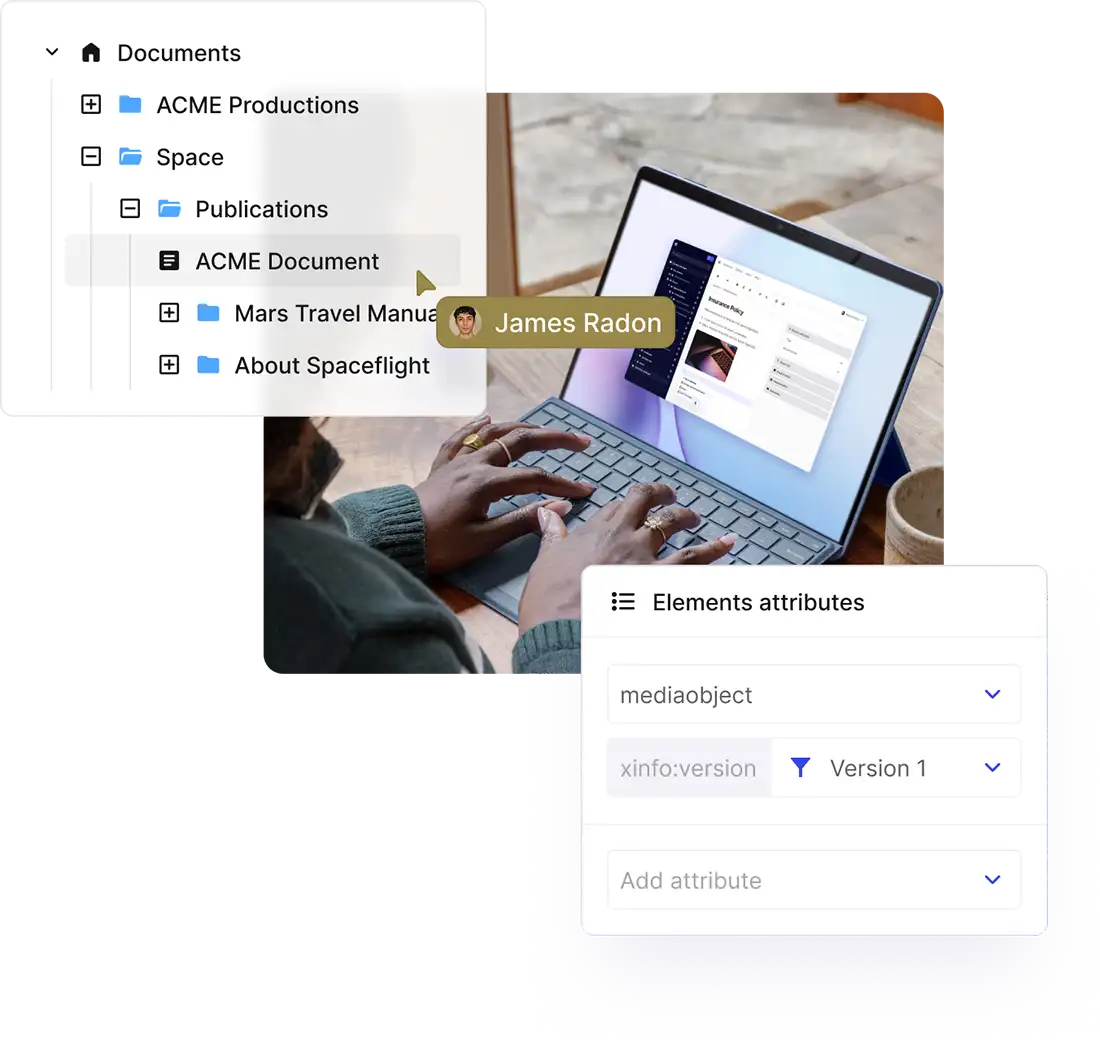
Branches, versioning, and conditional content keep product versions, regions, and audiences aligned without duplicating entire documents.
04
Manage translations like you manage all your content.
In one place, with a single-source of truth and a source language where you do changes that comes through in all
05
From one content set, teams publish to web, PDF, portals, and learning formats, and connect to platforms like Zendesk and Fluid Topics.
06
Improve continuously:
Taxonomies and consistent structure make it easier to audit, refactor, and optimize content as products and markets change.
The Paligo ecosystem: start your shift to structure
What working in Paligo looks like
- Write with clarity
Structured topics guide consistency without slowing content creators down. - Collaborate in one place
SMEs, reviewers, and translators work directly in Paligo - no file chaos, no email chains. - Manage versions and variants
Branching, conditional content, and controlled reuse keep products, regions, and releases aligned. - Publish in minutes
One source publishes to web, PDF, portals, learning formats, and integrations with Zendesk, Fluid Topics, and more.

Customer quote: I had to have a solution that was going to be scalable and that would allow us to create efficiencies and do more with the same amount of people. And that, to me, was Paligo.
Marcy Badertscher, Senior Manager of Information Development, InTapp