
Back to Webinars
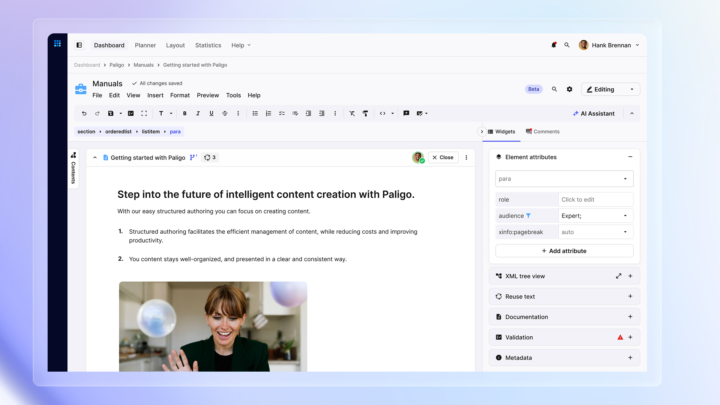
So, alright, everybody. Thank you for coming back and for joining us for this presentation in today's TakeOM Technology Day two thousand and twenty three. As you probably just heard, we have one more presentation in store for you right now And after that, we'll transition to a panel discussion at four fifty. And I hope many of you will join us for the panel discussion again because that's where we have more chances to ask more and deeper questions to any of the speakers that we heard of this morning or afternoon depending on where you are. But before we shift to the panel discussion, let's actually look at the presentation for the day. And in a word where moving to move modern content strategies is often seen as a daunting and time consuming task. Our speakers today are here to prove that can actually be quite smooth and an enjoyable journey. So let me first introduce Fabrice lacroix a serial entrepreneur and web pioneer with an impressive twenty five year history focused on search technology, content enrichment, and AI. He is the visionary founder of fluid topics, which many of us know, and he's which is an AI powered content delivery platform by industry leaders for seamless publishing and exceptional customer experience. The platform unifies technical content from all existing sources and it delivers as actionable information that is tailored to the user, the situation, and the general. And I can say that I've known five trees for close to ten years and I know that it's really great to have him here today. Though Prefries did not come alone because joining today, joining Farfries today is no other than Josh Anderson, an information architect at Polygo, a company that makes end to end component content management systems. Josh is known for his expertise in analyzing and structuring content to unlock valuable insight through creative information organization. And he has graced the stages of industry conferences such as Lavacom, convex, word, I I a. I a day, and As of today, the TakeOM Technology Days. Josh is joining us from Canada, and I'm really glad to have both of you here today. And without further ado, I'll hand over the words to Josh and Fabrice to have them show us how migration is faster, easier, and more fun than we most likely, but think. Josh Thank you, Josh. The floor is yours. Thank you very much. And good afternoon to you all. And good morning, Josh, by the way. Oh, yes. Good morning. Good evening for you. I think it's a little later in France over there. Yes. So let's start. What are we talking about today, Josh? Today, we are talking about migration myths. In migration in the sense of content migration. Maybe you have all your documentation in one place, and you need to move it to a new place for whatever reason. That's our content migration, and this might be faster, easier, perhaps even more fun than you might anticipate. And we'll talk about that today. So the thing about these content migrations is that they are often viewed as a huge challenge. For starters, you're gonna have new tools that you need to use. Maybe you're going to be authoring in a new environment, maybe you need to learn new tools or technologies to even make the migration in the first place, and this is kind of intimidating. There's also change management. It feels like it's going to be difficult to convince other writers on your team of the value of changing their way of doing things. Or to convince that your company or your organization that it is actually worth this kind of a cost. And so, content migrations They they are a challenge. I mean, no doubt about it, but they're also a prime opportunity to set yourself up for future success. And so, each person at your organization who you can talk to about this, it almost feels like, like, you're overcoming a boss battle or something. Right? And and if we can get these allies on our team, maybe this will be a little more fun, a little easier, than we expected. What do you think, Fabrice? A fan. Well, we'll try to make it fun in the presentation. I don't know if it's that fun, but I know it's like probably the biggest hurdles. I agree with you that most of the time, people are lots of people are convinced in the company that there is a need to change for more modern ways of writing, managing the content, during that content. And the tricky part is not necessarily about finding the tools and running all that process, but it's also convincing people around you and particularly your hierarchy and your managers that this needs to be done. So to make it fun and trying to make it informative. We turn that into a game. So we are going to go step by step, trying to convince the different people you have to work within your company starting with the technical writing team lead, if it's not you can be your department lead, and then you'll have to go probably through the end of product guy. Okay. I'll let you let him know why you need to change. And, then it's getting a bit more tough when you cal comes to convincing the VP finance, your CFO, that you need money for that. And they're going that's going to be ROI, and you have to show the ROI. And last but not least, probably at some point, you will have to convince your CEO, whoever CTO CIO of the need of this transformation. So that's the so we made it sort of a game where you have to go stage by stage and convince all those peoples and we will try to highlight, explain you based on our past experience, what are the questions they may ask and how you can at that respond to these questions to convince them and make them allies so that they can support you in this transformation process. So let's start and bus number one. Let's start with the technical writing lead. I think Josh, you know what those guys well. No? Mhmm. Yeah. So, imagine if you're just a a technical writer on the team and and you know that change needs to be made, but how can you convince your lead of these sorts of things? Your boss, And I think there's a few points that are good to focus on because the boss is gonna probably bring up, and it's probably true that writers they don't wanna use a new system. It the one they have now is probably enough of a challenge. And so to learn something new, It's gonna be too hard. It's gonna take too long. It's too much effort. Is it even worth it? So how might you as a technical writer respond to these types of challenges? How can we overcome this boss, so to speak? Well, I think part of it is that you should focus on the better authoring experience. That you're likely going to have, on a new content delivery platform or a CCMS, for example, There's better user experience. It can make authoring more fun when you don't have to worry about, for example, code views, If you're using a more modern platform such as Legal, the company I work with, we have a very easy code free authoring view where you might not even realize it, but what you're doing is creating well formed docbook XML in the back end. And so the authors can take advantage of structured authoring of XML without actually having to to get into the weeds of it. So that can make things, easier. And then, of course, with all these platforms, there are support teams, there's extensive documentation, there's tutorials, maybe even tutorials made by, other companies that are using the platform, maybe even ones that aren't made by that platform itself. And so there are ways to overcome these challenges for sure. So you mean that your tool and modern authority means this as easy to use as something like word, but with the benefits of structured offering tagging and all these advanced way of modern way of writing, but with days of these tools we all know? That's right. That's right. Yeah. So, like, if you wanna do a very modern content management thing, such as to add a filter in your content. With a lesser tool, maybe you would need to know XML and you would need to find the right place to put the attribute or whatever. But in a modern system, it's a matter of highlighting things and pressing the button and choosing the filter from a drop down. And so it's much more reminiscent of that kind of MS word experience that your authors might be more used to. Oh, okay. So so you mean that as as a technical writer, this is, and showing that you you feel that you need to show these tools to your to your lead so that they get it and they understand the value it brings and how difficult is that to convince them when they see the two always, Alex. Okay. Now I get it and you're right. We need to switch to that. What sort of a fault you have to put around that around those arguments? What's the process to go through that? More like demoing letting people play with it, what is the usual path to this con to convince them? Yeah. I think, doing the research find a system that works well for what your organization's goals are reaching out to them setting up a demo. All these companies love to give demo And then you can oftentimes get a trial of the platform for a week or a couple of weeks or so. And so I would say go in there with some kind of goal, like, let's have a use case in mind. Let's say we create support documentation. Can I do that inside the new system? Let me just try that out for a week or so. And if you if you can prove to yourself that you can meet the use cases that you have, and you can show that to your team lead, for example, I think that will go a long way in demonstrating that this is the right move, and you'll be able to get them on your side. Excellent. So we can say we've got one. Level one accomplished. We've got this boss convinced. So, pretty cool. So now we got, as a tech writing team, everybody's on the same on the same page, convinced that modeling authoring brings value, meaning that probably, Nick, then you'll have to go to the next, which is your department lead. So what do you think was that? Right. So now you were a step above the tech writing lead, maybe we're wherever technical writing lies within your organization, whether that's marketing or, sales even or or something else like that. So now we're talking to this person. And this kind of person, they've got their own arguments. They think it's probably gonna take a long time. To get the content into the new system or even to just make the purchase of the new system, it it can be it can take a while. And there's also a real concern about having the resources or the skills available to make this happen. Do all the writers know how to migrate the content is do we need experts for that? Do we need to go find consultants or whatever? These are the kinds of concerns that this person is gonna bring up. And so if we want to convince this type of a boss, one of the things that we should really focus on is the, cost save things due to, author efficiency. Even, knowing that migration doesn't have to take a long time, especially if your content starts off in an XML format. If you're going from, say, did a XML to Docbook XML or whatever. The fact that it's already in XML means there's tools out there to make this kind of conversion And it and and, you know, no conversion is really perfect. You might need some massaging at the end of it, but ninety percent of it or so might be more quick than you might realize. So we have, of course, the immediate improvement in user experience, as we mentioned with the other boss. The migration It it can take a long time if you wanna move all your content. But what if you only move one publication at a time, or you only focus on one department at a time. I would say pick a pick a logical subset of your content, and and start there. And then it from the lessons learned from how that migration went, you can, you can see how the rest of it will go. And you might be able to convince yourself and your boss that you do have the resources or or the skills available, that perhaps it's not as hard as was expected. And some content finally could be left in the legacy format. Maybe you don't really need to do anything to it. Maybe you can just keep it as is. In the new system. And so in that case, it won't take longer than expected. And, yeah, with these strategies, I think we can go a long way in reaching the department lead. What's on your mind, Fabrice? Is there anything else you think? Yeah. I think so. I think from from what from what we've seen, one thing that I agree with you is that they're very, very afraid of the resources it's gonna take. Probably, you know, many companies are now very constrained in their recruitment and, the people that free to be onboarded to new projects. And, they will they want as well to have shorter projects to make sure they can control the cost so that they don't engage in some sort of, like, twelve, twenty, twenty eighteen, three, two year, three years project. They want something that delivers result fast. And without having to put ten people working and fully dedicated to that. So I think that's this migration thing you mentioned by having modern tools that are readily available to ingest and transform existing format to do new formats is very important to them and showed user show those those leads, those people that most of the DAV fifteen can be done in matter of weeks and not just and that month. I think it's critical here. And you have probably to bring up that and show that as part of the the convincing process to say, look at that. For example, let me take those set of files and show you how I can just we load that into our new system and how ninety percent of that is done in matters of hours. And as you said, probably at the end, you can massage that content, readapt it, chunk it further, retarget a bit to make it more adapted to what you aim to do next, but you have to show that it's gonna be easy. It's not gonna be, gonna be like, you have to copy paste everything back into the new system and rewrite everything So that's a huge that's a huge point to me. I agree with you on that. And the second point that I fully agree with is really the fact that migrating to a new tool does not mean migrating audio content. And we see a lot of our customers that take advantage of having a CDPA content every platform on top so that they can have this new system that is in which they have migrated part of the content or they can do this migration on the flow as it's needed for writing a new version of a duck for a new product. And but they don't migrate everything approved. It's like, okay, let's start the new system, and we'll use the new system for the new products, this new project. And then for this new product, we're going to migrate the content from the previous version of the product that we are going to reuse and readapt. And then we publish from this new system and all the the old versions are still published from the old system. And after some months, You have this slow transition to the new system. Well, I think probably ten, twenty, thirty percent of the content kept in the old stem or then transforming to PDF for end of life product, end of sales product, and not migrating. So you have to be wise and migrating doesn't mean to be, does doesn't mean a Navy investment, root falls, everything transformed, but small, like, being tactical and doing that at the right time when things make sense. And then everybody is more everybody in that case is more willing to do that than, the full migration when most people are not I I mean, they understand that there's no sense, spending months, migrating everything, and then having the same content just in the new system and having no benefit into this migration. So it needs to be part of the rest of the process, which is new products, new versions of the dock, new product lines, and balance the effort so that it pays back rapidly. As for me, that's what I what I see them as, as something that makes those projects, adapted and financed by the company. Definitely. Okay. So we can tell that we can convince that boss, which is cool. Now we have two people supporting us, which leads us to the next level. What is that? Oh my god. Add of product. That's interesting. So, that's that's a bit of a change here because, level number one level level one level two. So, tech riding lead, department lead, where probably more connected to where you are doing and to this, content management need and strategy. And here you start dealing with people in the company that are not directly related to the tech doc, and they see the doc as something necessary, but it's not their own mission. And, and they see everything that is not supporting them in what they have to do as something that should be avoided. And and typically when you talk to the end of product, they may be afraid that, this change of the system will impact the capability to release the product on time and if you take some and I I know it's good. It's it's true for almost any industry, like, because product are really more often, updated, more often, even hardware products. But if you take just software, the software vendors, now they release a version every month or some some some every week, as opposed to a few years ago where there were probably one or two releases per year. And now that we have this faster base of release and do shorter release cycles. Those product managers are very, very, anxious about the fact that any change around what they have to do might impair and slow down their own process and their own way of working. So that's a huge concern to them. So you have to, you have you have to explain that that's absolutely the opposite that's switching to more button tools will not slow down the product release and the way they work and, this, this workflow in in the company, but I'll, on the opposite side, we'll make it faster. So, First, it will not go slow it down because as explained earlier, you won't need three months or four months just fully dedicated to migrating the content because you will migrate the content. You will add up the new tool. On a per needed basis, migrating the content slowly as needed. So it's not like everything is frozen for three months because you're just dedicated to migration, but you make that as part of an improvement process and ongoing process. But as well, putting in place modern tools and especially decoupling They are faring and the publishing with the CDP. So it's like Bali Go Free topics. It is sort of tools linked together but dissociated. You have the CDP. The content of a platform is able to ingest content from more sources as well, and that's something that has a huge value for product marketing. Let's take software vendors, for example. You can write. You will write your tech doc, rev guys, and manuals. In your CCMS, but you have more content than just that. If you take software vendors and even know hardware products, you have API. So API documentation is usually written in swagger, open API format of API tools, and then these API specs will be published not from the authoring system, from the CCMS, but directly on the swagger, the the swagger tool. And, you may have as well knowledge basis, or, subject matter expert, like developers producing a bit of content, specifically to developers that is often created in markdown and stored in a git environment. So that's another source, and that makes sense to have all this content unified and published at the same place. Which is exactly what the CDP does, aggregating all your content and creating this unified repository of content. That's where by adopting this modern strategy and this new tool, you can explain your head of product that not only they will benefit from a better tool something faster for writing the new versions of the doc due to reuse of content, varianting of content, better meet at data management. So there's already an improvement there. But as well having a CDP in place, you will be able to get more content, different format from different sources, different types of content being published, being creating, being managed in parallel so it's faster as well. So, it's all of this capability to streamline the publishing process and as well as the authoring process split in multiple groups of people, different stakeholders, being able to provide that knowledge, that information aggregating combined in one place, will speed up the time to market. So that's very important to explain that. And, And again, same for when it comes to updating content. I think those modern systems means that the content that can be enhanced fixed complimented, augmented every day. And, as soon as some a piece of content has been adapted, augmented, fixed. It can be published immediately on the fly. So it's on the fly publishing, so they don't have to wait. And we've seen that with some of our customers, one of them being Exagon. And, he said, you know, the challenge we add So that software vendor said before we were, we could only release, one or two versions a year for the tech dock. The product won't need to go faster, but the tech dock in the old system was a blocker because it was taking up to three to four weeks to sort of output generate almost PDF and static HTML. And they could only do it twice a year at most. And at some point, that the the product came and said, okay, now you need you are we are changing and we'd like to deliver one version to the month. So can you cope with that pace? Can you deliver content, update the content, and generate, and publish the content every month, the new content, the fixed content, the adapted content. And exec was not able to do that. Well, the tech doc department was not able to do to do so with the old way of managing the content, writing the content, generating publishing the content. And then the the switch to free topics, and now they deliver on the fly, meaning that in fact, now that the product, the the product department delivers a new version every month, the the the the content is published on the flight at the same time. And if the product wants to go off for weekly delivery, then the doc will be published on a weekly, on a, on a weekly basis as well. And in fact, they could do that They do it every day every every minute. To fix a document, if it's a publish, it goes, to the CDP. So it's like really that's the opposite. You have to explain that transitioning to modern tools, modern ways of writing, managing the content will instead of slowing down the process will enhance the process, will make it faster and easier to manage. So that's very important. And not just for aggregating, but as well, Again, the content we use, content, branching of content, versioning of content makes it easier to adapt to the new versions of the product and the versions of the product. That's what I that's what I see. Do you, do you agree with that, Josh? Do you see other things that you could add to that? Sure. And, even on this slide, I kind of like how we've, like, summoned our helper, like, it's an RPG or something. We've made our summon to come in and add some extra points to convince the head of product. So, yeah, if you can point out these real life, these real case studies of how people they could only publish twice a year, once a year, even because the system was so cumbersome. And to speed that up, that that's so huge. And like you said, it it's it's not that the the system slows down the product releases. It it was really the opposite. It was their system was, they couldn't release as often as they wanted to because they couldn't get their documents out fast enough to keep pace. Yeah. This time experience, k, same thing. Excellent. So I think we can we can convince our end of product now. We'll get someone else on the side, which allows us to move to the next level and probably, I would say the toughest one. Oh, yeah. That's the business finance. Oh my god. Like this one. That up. That's like, show me that that's gonna cost a fortune. We can't do that. And I would as an introduction, I think that the the the the critical parts here when you start talking to, your CFO in the company is that how many of you the cost, you already have a cost to everything you do. I mean, the tools that you use, the way you publish, even if you write with world, there's a cost to that. I mean, the lice you don't the the license of your word of word is already paid or costs fifty bucks or hundred bucks or whatever. So it's cheap. But in fact, it does a hidden cost to that because whenever whenever you have to fix the content create a variant of that content. You start duplicating. And if you have to then adapt the content, you need to reopen all the docs where you have copied based a piece of content. And it takes time. So the cost is there. It's an Indian cost. That is a lot of cost. And that's the same for publishing. If you generate PDFs and then you put a PDF on the website and then people in time searching and reading the pdfs or if you manually generate HTML, you have to copy the HTML, revamp the HTML, make that put that somewhere steady HTML on the static website takes a lot of time, and we've seen that it's a lot of hidden cost And probably the biggest challenge here for me is that you have to show that the cost already exists even though there is not a line in the budget for that. Because it's part of the day to day, work of many, many people that does cost to everything in the company, and you have to surface those costs and show that in fact, there is an ROI and can reduce this cost even if you create a new budget time. So that's what I see as a huge challenge here because you are in many cases, you are creating a new budget line. But in fact, this budget line is just making visible something that is already existing, and sometimes it's way more expensive than the cost of the tools. So what do you think of that? You can almost flip it around on the VP and say, can we justify the cost of doing what we're doing? And can we continue on this path? And, Yeah. When you move to a new system, you're likely going to you're gonna see some cost savings due to the increases in author efficiency. And in terms of, like, measuring efficiency, you can think of, like, how long does it take to produce a document or a topic or whatever and think about how many people are involved in doing that and how much are they paid per hour? So how many hours of effort versus that salary and stuff? So you can kind of arrive at these rough estimates by doing that. And if you can show perhaps even during a demo of a new product, a new, CDP or CCMS that you are moving faster, that's great evidence to show the VP of finance that, we are saving money by doing it this way. But translation is another big thing even if your company is not translating things into different languages now, you want to create your content in a way where it's set up for success. You're ready for when you perhaps will translate one day. And so a good CCMS or a good, content delivery platform These things should be able to export to, files known as XLIFT, which is the industry standard for translation and localization. And when you do that, you can start to take advantage of translation memory, which is this idea that you don't have to keep paying to translate the same words or phrases over and over once you've done it before, you can keep a record of that. And, using a nice modern system, you can just sort of put those pre translated things in there already and not have to pay to retranslate them. So that's a a big part of it. Fewer support tickets. If you've got content that's well organized and robust and, you know, you gotta help site that's easily navigable. That can go a long way in helping your users solve their own problems and not have to eat up time on support calls or sending emails and then people on your organization have to spend time to respond to those emails. All of that counts as time, all of that counts as cost. And, yeah, and you wanna be prepared for generative AI, of course. Maybe we'll talk a little bit more about that at the panel later today. But, yeah, once your content is in that structured format, you are best prepared to take advantages, the advantages of this kind of technology. It's a further developed. May I help your customers build the business case? How do you because probably, you know, you can give those all those examples to your CFO, your VP filings, but at some point, you need to put that in some way in a spreadsheet So do you recommend or do you have templates of spreadsheets that to your customers or do you help them build those business cases and spreadsheets that they can in which they can build they can show these ROI. How would you advise them to do so? I don't do a whole lot of spreadsheet myself. Although, that doesn't sound like a bad a bad way of doing it. If you can really illustrate the numbers, just get the scale visible of how much things cost, I I'd like to start with asking people what their their goals are, and are they really meeting those goals with their content? And, how can their system better help them reach those goals? If they wanna publish lots of different things, if they can take advantage of reuse, it's not gonna take as long to to write all those pieces or, you know, if they wanna have users find answers quicker, having better structured content, more reusable, more navigable more easily findable, you're gonna go away and, and cutting down just, like, numbers of support tickets, for example, maybe you measure things that way. So I think whatever works, what you you know your own company's VPs, well, many different ways. Okay. And I agree with you. We'll skip JNI, but we've seen, because we've seen well, we have implemented JNI in fleet topics and we've using our self gen AI to reply to the to generate the reply to the cases automatically based on tech doc and quirks where Yeah. Because we're using structured content. We have the topics. We have the metadata. So we know how to use the content and just instruct the JNI to write the replies by leveraging the applicable content to the content that really applies to that question and not just any content and the fact that it's structured content, finely tagged content, well organized content makes it very efficient. So probably that's a subject we'll discuss, during the panel. So I skip that one. And and you're right. We've we have, we have feedback from customer that have measured this part of the ROI. It's just one ROI that you can, use with your VP finance and ID measurable, with that with free screen print, And I said that the the moment they rolled out free topics, they have seen thirty four thirty four percent reduction in the number of tickets. And that's That's great. That's real money because we know that every company knows how much it costs to manage a case. It's get opened by a customer. It goes depending on the type of question from a hundred euro dollars that's the same. To about two to three hundred if it's a more complex question. So to sell out the money, and that that's a that's a number that your VP finance is monitoring usually. Meaning that if you can say, okay. We see that on average, having modern delivery with modern occurring, we have companies testifying, that it's reducing the number of tickets by one third they can immediately know how much they're gonna spare with that, and it's huge. And that's, that's an important point to make to those, to those people that it's gonna help a lot a lot. And I think that with that, we can say that you can convince even your w do your VP finance that it's gonna make a huge, a huge impact in your company, which then leads us to the last level which is suitable. And now we have to convince, the C suite, whether it's your CEO, CIO, depending on the size of the company, that, it's important to make this investment. And usually, the problem is that those guys are very far from what you do. So what do you think, Josh? Right. Yeah. So sometimes there's the sense that content is just not important or it's it's fluff. It it's not the core of the business. But, you know, as as one person has said, content is king. Content is kind of what keeps customers coming to your site, even finding your site. This is what feeds the search algorithm. This is what expands your reach. And so, there's some interesting quotes that we can share that, you know, I think c suite type people are very numbers oriented. It's not enough just to say, trust me, bro, content is super important. But if we can really say, by the way, seventy four, seventy four percent of b to b buyers review the user documentation as part of their purchase cycle. So how is your user documentation? Is it impressive? Does it look like if you run into a problem that an answer will be there for you or, through your readers have this impression that this product is gonna be too hard to use. It looks fancy, but, I don't know if I trust my own expertise, and if the documentation isn't there to help me. I don't know if I'll get it. Another thing we can point out is, about two thirds of b to b buyers, find that the most useful types of content to aid their purchase decision making were those that talked about product specifications and functionality. In other words, the kind of content that is really well suited to component content management systems, content delivery platforms. Finally, we've got seventy seven percent of customers the source on this one is from vanilla forum, the other one from Focus Vision. This is that, that many customers say that they view organizations more if they offer the self-service options for customers looking for support. Some people want to have their handheld and to meet with somebody, but if you give the options for people to help themselves, that goes a really long way. And and this is all content. And this is all just words at the end of the day, but this does make a difference for people's purchasing decisions. And it it's not something that you should discount. Mhmm. I agree with you. Mhmm. And we've got this, case study of, hexagon asset life cycle intelligence. They went from no internet presence at all, to the top four Google results in a year. Content is what made them do that. You can throw all the money you want at, paid search ads, but if you don't have content. Right? Like, what are they clicking on? What are they getting to? You need to establish that presence. You need to speak words in the the industry and get your name out there and everything, and and it's content that will help you do that. I agree with you. It's huge disappointment. Because when you look at what marketing spending to get market awareness, brand awareness, trying to write content and invest in content when you when you think about it, you have already sevens and sevens of pages of content that is written. That's your doubt. It contains all the keywords about the functionality, the features of the product that people are looking for. So, probably yes. Taking part of that content, at least the not confidential content, and publishing it in a way that makes it highly indexable, highly visible, to lose web search engines add an amazing impact at no cost. So you can you can bring value to your company easily with that. That's that's One one other thing I think we should point is that when you adopt single sourcing, you can really promote consistency throughout your whole content corpus. And this will reduce the chance that maybe an outdated variation of content exists somewhere, protecting the organization from potentially expensive lawsuits or other troubles and stuff. So cease we might be interested in knowing that you'll have a way of maintaining that consistency throughout all the content. Compliance and risk You know how to talk to those guys, obviously. Yes. You know where they're at? Well, I think we convince this at the bus, then we're good. So it means that. Obviously, we did it. We've won the buzz battle. So, all of them are fully convinced now, you know, We've saved the documentation and the money of that. We have tons of friends in the company now. Excellent. Love that. Thank you, Josh. I think, that was a fun game to play now. Sure. Yeah. Thank you, Fabrice.
Nov 9, 2023