Preparing Product Content for AI: Unified Knowledge and Governance in Technical Documentation


Whether you’re actively exploring AI-powered tools or not, preparing your content now is crucial for future success. However, according to Salesforce, 75% of companies struggle to scale AI, partly due to disconnected systems and data. The answer to this challenge is a unified knowledge framework that provides a structured approach to creating, managing, and storing technical content.
We’ll explore why this framework—encompassing consistent language, taxonomies, formats, and a solid content governance strategy—is essential for delivering a seamless customer experience. More importantly, we’ll discuss how unified knowledge is the bedrock for effective AI, particularly with generative AI.
From ensuring accuracy in AI-generated responses to protecting business-critical knowledge, we’ll cover the key strategies and technologies, including component content management systems (CCMS) and robust content governance, that will make your content AI-ready.
Ready to dive in?
Key Takeaways
Unified knowledge goes beyond centralization — it’s a framework for consistent structure, language, and metadata across all content.
AI quality depends on content quality — clean, structured content reduces hallucinations and improves response accuracy.
CCMS provides the foundation — single source of truth eliminates duplicate content that confuses both humans and AI.
Content governance protects your business — control what trains your AI and maintain human oversight throughout.
You’re probably already doing the right things — good content practices for humans are good content practices for machines.
What Do We Mean By Unified Knowledge?
Think about all the technical content you create to support customers: technical documentation, in-help content, knowledge base articles, support tickets, API documentation, training content, and even community discussions. Typically, you would create all these content types separately, often by different teams, and publish them to different channels.
Any system or network drive can “centralize” all this knowledge. But just because your information is stored in a central location doesn’t mean it’s unified.
Unified knowledge means you have implemented a framework for creating, managing, and storing all your technical knowledge. This framework includes a shared structure and language, taxonomies and metadata, consistent terminology, and content formats. It outlines the people, processes, and technology you need to ensure your knowledge is accurate, consistent, and always up to date, regardless of the channel where it’s published.
Preparing and Delivering Content for Successful AI Deployment
Learn more in this deep-dive webinar.
Why This Matters: A Real Example
A good example is a company that sells several different products. Each product team writes the technical documentation for their product. They each have their own templates, guidelines, and processes for creating and managing the documentation. And it doesn’t match the other teams.
What happens if a customer buys multiple products from the company (which is what companies want their customers to do)? What they’re used to getting from one product may not match what they get from another. It can confuse them and slow them down in learning to use the new product. Plus, information that should be the same across products isn’t—because each team manages that information differently.
Inconsistencies in the actual content and how it’s presented cause confusion and frustration because they make it harder for the customer to use the new product. Frustrated customers don’t stick around long; they leave for other companies that ensure their product information is consistent and easy to understand.
A unified knowledge strategy involves making it easier to understand and use your product.
Why is Unified Knowledge Critical for AI?
Unified knowledge is especially important for companies that want to use artificial intelligence to deliver modern customer experiences—conversational interfaces that use generative AI. Gartner predicts that by 2026, 80% of companies will have deployed generative AI-enabled applications into production.
Arun Chandrasekaran, Distinguished VP Analyst at Gartner, notes:
“Generative AI has become a top priority for the C-suite and has sparked tremendous innovation in new tools beyond foundation models. Demand is increasing for generative AI in many industries, such as healthcare, life sciences, legal, financial services and the public sector.”
Product content is a natural use case to get started with. Why? Behind every product is a ton of documentation on how that product is built, how it works, and how best to use it. Plus, think about all the knowledge base content created from support tickets, all the customer questions in your customer community, and the conversations in your team Slack groups.
A company can use generative AI to build a large language model (LLM) that includes product information and then provide self-service experiences that help customers get answers and learn to use the products better. Because of how generative AI works, the content and language used in responses can be adapted to the customer’s level of experience.
But generative AI is only as good as the information it’s trained on. Your job is to ensure that the technical product information is accurate and easy for the AI to digest and understand.
What Makes Content AI-Ready
A unified knowledge framework helps the AI better understand the context and relationships of the information it ingests, improving its ability to provide accurate, holistic answers to even the most complex queries. It also reduces the likelihood that the AI will hallucinate or make up incorrect information.
Val Swisher points out that to train AI well, the training content it ingests must be cleaned up. If you want the AI to produce useful results, you need to remove redundant, inaccurate, and inconsistent content.
“All the things we do to make content better for humans—componentize it, structure it, clean up the grammar, tag it with metadata—make content better for machines as well.”
When it comes to product-specific documentation, AI-generated answers need to be comprehensive (including information from all sources), accurate, context-aware (product version, role, etc.), and regularly updated.
If you don’t provide your AI with unified knowledge? The AI will have to ingest content from different business areas managed by different teams using different systems, and it will struggle to make connections across those systems. In the end, you risk the AI returning fragmented or inconsistent responses—and sometimes even the wrong ones.

The Right Technology is Key to a Unified Knowledge Framework
Having the right technology is one of the challenges to creating unified knowledge. Although companies understand the need for technical content, they don’t always see its full value, so they don’t always invest in the right technology to create and manage it.
From a technology perspective, the best way to unify your technical content is to use a component content management system (CCMS). By storing all your technical knowledge in a CCMS, you provide a single source of truth for that technical content.
We’re not just talking about putting the information in a central location but also providing the unified knowledge framework you need to ensure that all that information is created and managed consistently.
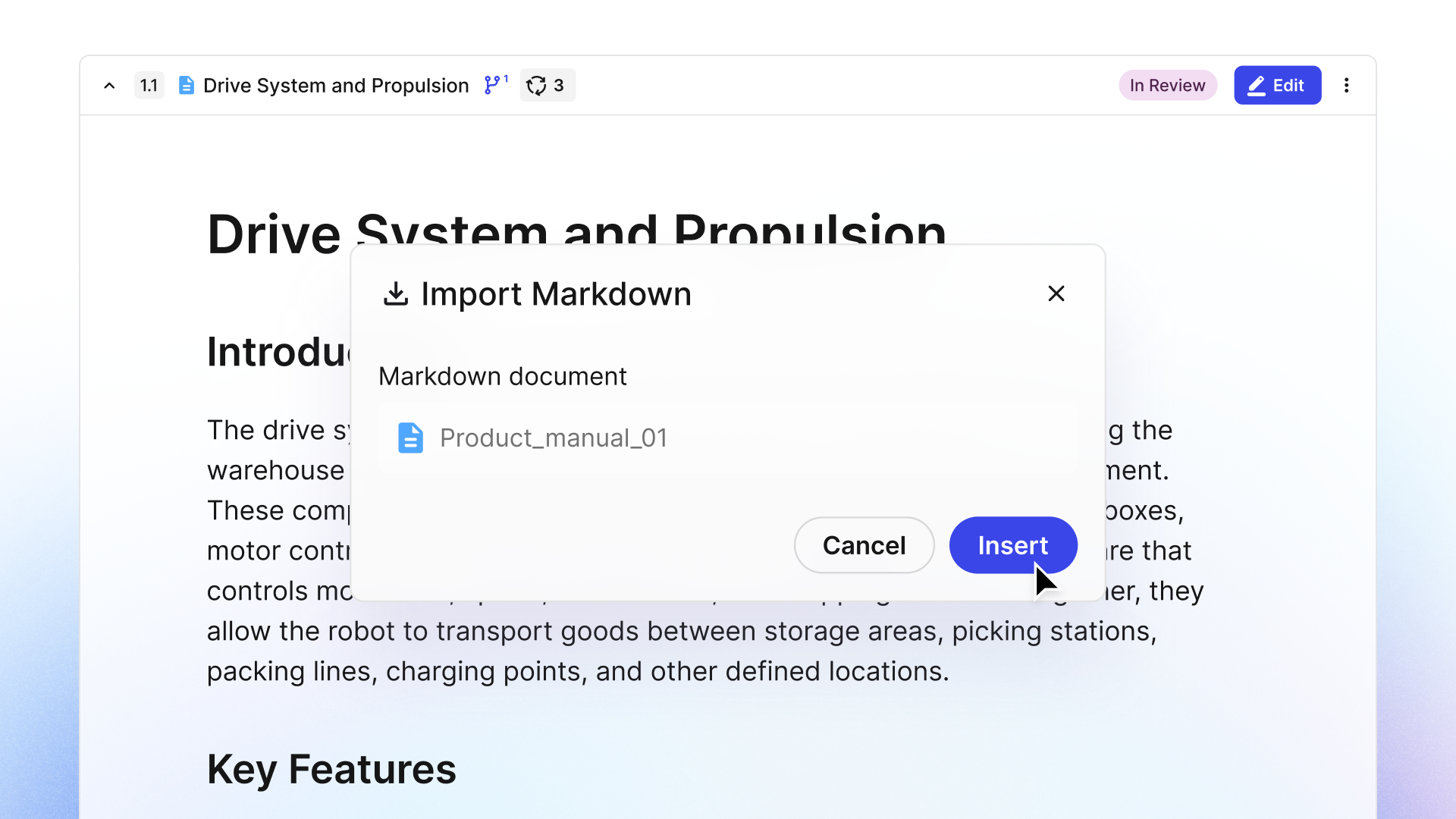
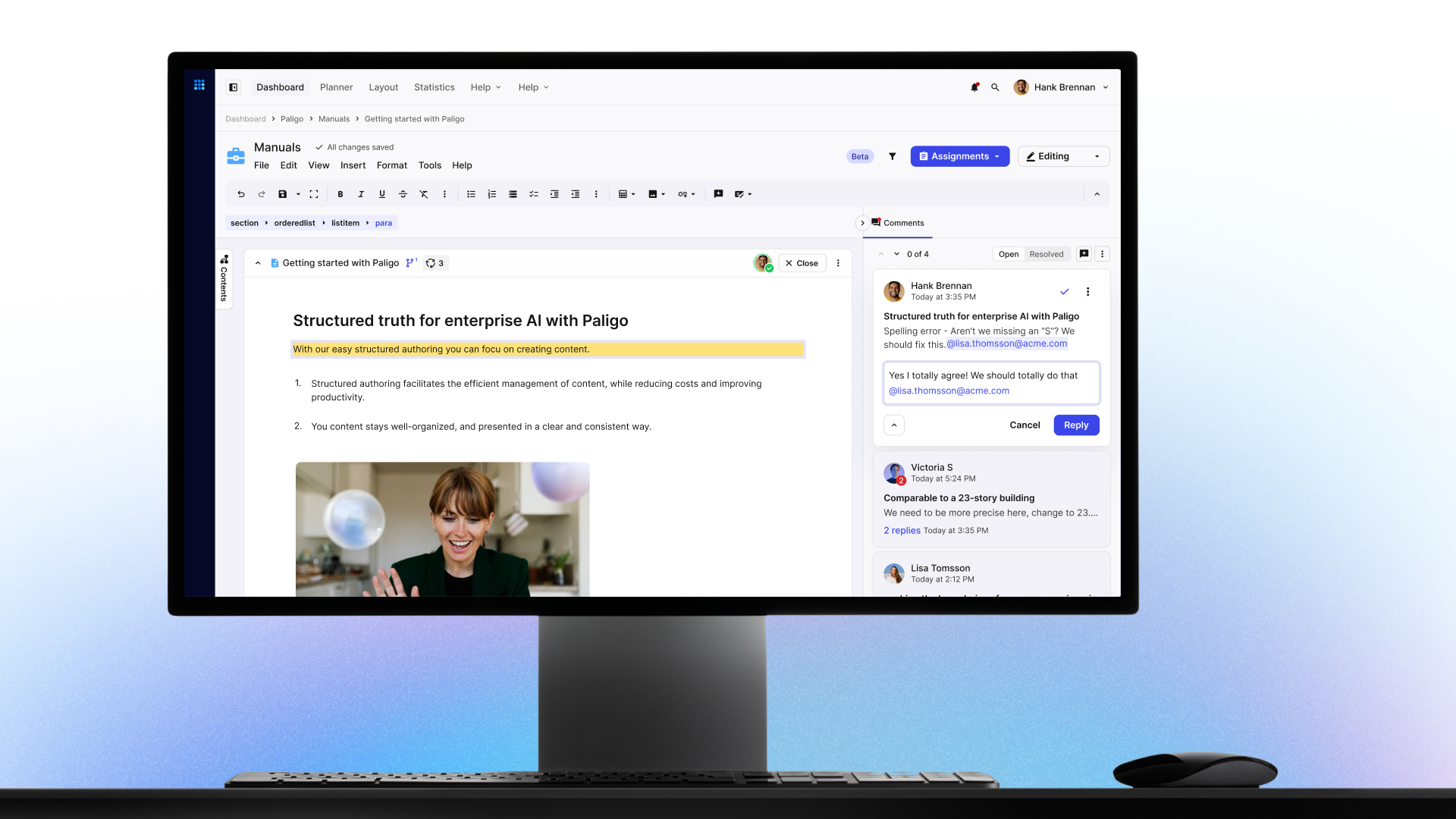
A CCMS provides a structured content model and shared taxonomy. It also supports content reuse, so you can reuse content across your publications, eliminating duplicate content that’s hard to track and keep in sync. CCMSs like Paligo also include collaboration and communication features that facilitate knowledge exchange among your technical writers, managers, and subject matter experts—not just for one product line but across product lines.
Content Governance: Protecting Business-Critical Knowledge
You know you want to take advantage of AI to deliver great customer experiences, but you’re worried about exposing business-critical knowledge to people who shouldn’t have access to it—including companies that might use the knowledge to train their own large language models.
The good news is that you can leverage AI and protect your knowledge too. It just requires a strong content governance strategy. Plus, content governance is a critical element of any unified knowledge framework.
Essential Governance Elements
Content governance for technical documentation refers to the systems, processes, and standards you implement to ensure the quality, consistency, accuracy, accessibility, and findability of your technical content. It covers the entire content lifecycle, from creation and management to publication and eventual archiving.
Content models: Content strategists define structure and organization to ensure customers can easily find what they need. This includes structured content models, metadata and taxonomy, information architecture, and templates.
Roles and responsibilities: Define the roles of everyone involved, mapping individuals to clearly defined responsibilities and permissions. This ensures people can only perform their assigned tasks and have proper access.
Standards and style guides: Unified knowledge has a consistent writing style and tone. It uses the same terminology, follows similar formats, and consistently uses the same types of visual elements.
Workflows and processes: All documentation goes through a review and approval process. This is mapped out in workflows where specific roles are identified for each stage. Additional workflows can support collaboration, archiving, and content updates.
Quality assurance: Ensure documentation is tested for accuracy, clarity, and completeness, and that it adheres to the defined style guide.
Content maintenance: Once published, content still needs regular review to keep it up to date. A maintenance plan defines when and how content is reviewed, including when to archive it.
AI-Specific Governance Requirements
The governance components above apply to creating and managing technical knowledge that every company should have in place. However, there are additional requirements for content that will be ingested by AI—and for content that AI generates.
Select the right documents for AI training. Not all documentation should be used to train the AI. Create a rigorous process for selecting, cleaning, and verifying what goes into your AI training dataset. Focus on up-to-date documentation—you don’t want to train the AI on outdated technical information. And carefully control what documents are fed into the LLM to avoid exposing confidential information.
Train the LLM on your content standards. LLMs don’t return the actual text (how LLMs work) in your documentation—they write brand new text based on what they’re trained on. Train the LLMs on your company’s specific writing standards and style guides so they return text that follows those guidelines.
Keep humans in the loop. Human oversight is essential when selecting training sets. Beyond having accurate documentation, ensure your training set won’t contribute to bias in language, tone, or examples. If you’re using generative AI to help write documentation, treat LLMs as powerful writing assistants, not replacements for human writers. Implement mandatory review and editing processes.
Be transparent. When using customer-facing applications that leverage generative AI, be transparent about how it’s trained and used. Explain potential limitations and how you’ve worked to ensure accuracy. Your customers should have a method to provide feedback when errors are found.
A Step-by-Step Guide to Product Knowledge Documentation in a CCMS
Develop a comprehensive understanding of product knowledge documentation.
Having Your Content AI-Ready Makes Good Business Sense
According to Accenture’s global research, 84% of C-suite executives believe they must leverage artificial intelligence to achieve their growth objectives. A key part of growth is retaining and growing the customers you have. And a key part of that is ensuring they have the information they need to use your products successfully—when they want it and how they want it.
Generative AI is a natural fit for customer-facing applications that provide product support. You can use it in self-service tools that allow customers to ask questions and get answers. It can support customer support representatives as they work to resolve problems. It can help technical writers create documentation faster while following defined standards.
The key is that it reduces the time needed for customers to get answers and allows support teams to focus their attention on more critical issues.
Generative AI can also support sales teams as they build relationships with potential customers. Sales reps often get asked product questions they don’t immediately know the answer to. When you train your LLM on technical documentation—including any “tribal knowledge” located within teams, Slack groups, and customer communities—your sales reps can quickly find the correct answers.
However you choose to leverage generative AI, having all your technical knowledge AI-ready is critical to ensuring the responses it generates are accurate, complete, and actually answer the question.
The Wrap
Too often, we think we need to do new things to support new technologies like generative AI. But the truth is that when it comes to creating the right technical knowledge to support customers, we should already be implementing processes that will support these new technologies.
A unified knowledge framework and content governance strategy are essential to supporting customers, even if you don’t leverage AI tools. When you are ready to implement AI-enabled tools, your content will be AI-ready.
FAQ: Common Questions About AI-Ready Content
We already have documentation everywhere—is it too late to unify it?
Not at all. Most organizations start with fragmented content. A CCMS like Paligo can import existing documentation from various formats. The key is to start with a clear framework, then migrate and consolidate over time. You don’t have to do everything at once.
How do we prevent our content from being used to train someone else’s AI?
This is where content governance becomes critical. Control which documents are included in any AI training dataset. Use API-only integrations that don’t share data externally. Be explicit in contracts with AI vendors about data usage. And keep sensitive information in separate, access-controlled repositories.
Do we need to rewrite all our content for AI?
Probably not. As Val Swisher points out, the things that make content better for humans—structure, clean grammar, good metadata—also make it better for AI. Focus on cleaning up redundancies, fixing inaccuracies, and adding consistent tagging. You’re likely already doing much of this.
What if our AI gives wrong answers?
This is why unified knowledge matters. AI hallucinations often happen when training data is fragmented, outdated, or inconsistent. Clean, structured, up-to-date content significantly reduces this risk. But always keep humans in the loop—implement review processes for AI-generated content, and give customers a way to report errors.
Should we wait until we’re ‘ready’ to start preparing for AI?
No. The framework you need for AI-ready content is the same framework you need to serve customers well today. Start with unified knowledge and solid governance practices. When AI tools make sense for your organization, your content will already be prepared.
Learn more about preparing your content for AI by watching the on-demand webinar Preparing and Delivering Content for Successful AI Deployment.
Get started with Paligo
Paligo is built to meet the most demanding requirements, with plans made for any company from the growing SMB to the large Enterprise.
Get the Paligo Pulse once a month.
Stay ahead in structured content

Share
Author