
Why teams make the switch: from fixing to scaling
Unstructured systems force you to maintain content. Structured content lets you build and reuse it. In an unstructured or HAT environment, most of your effort goes into keeping content alive. Manual clean-ups, format-first content creation, and limited content reuse, leave teams in constant maintenance mode.
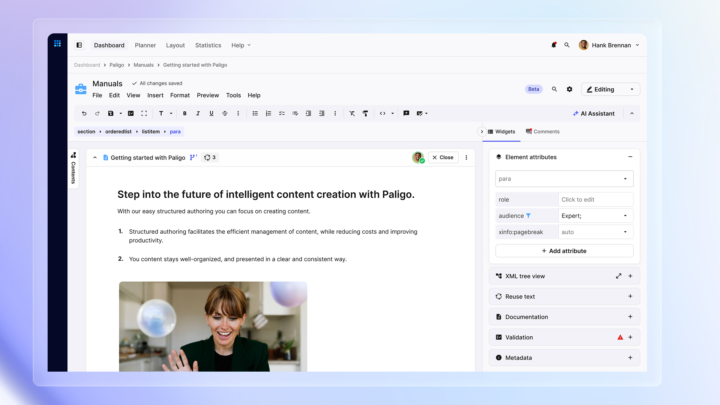
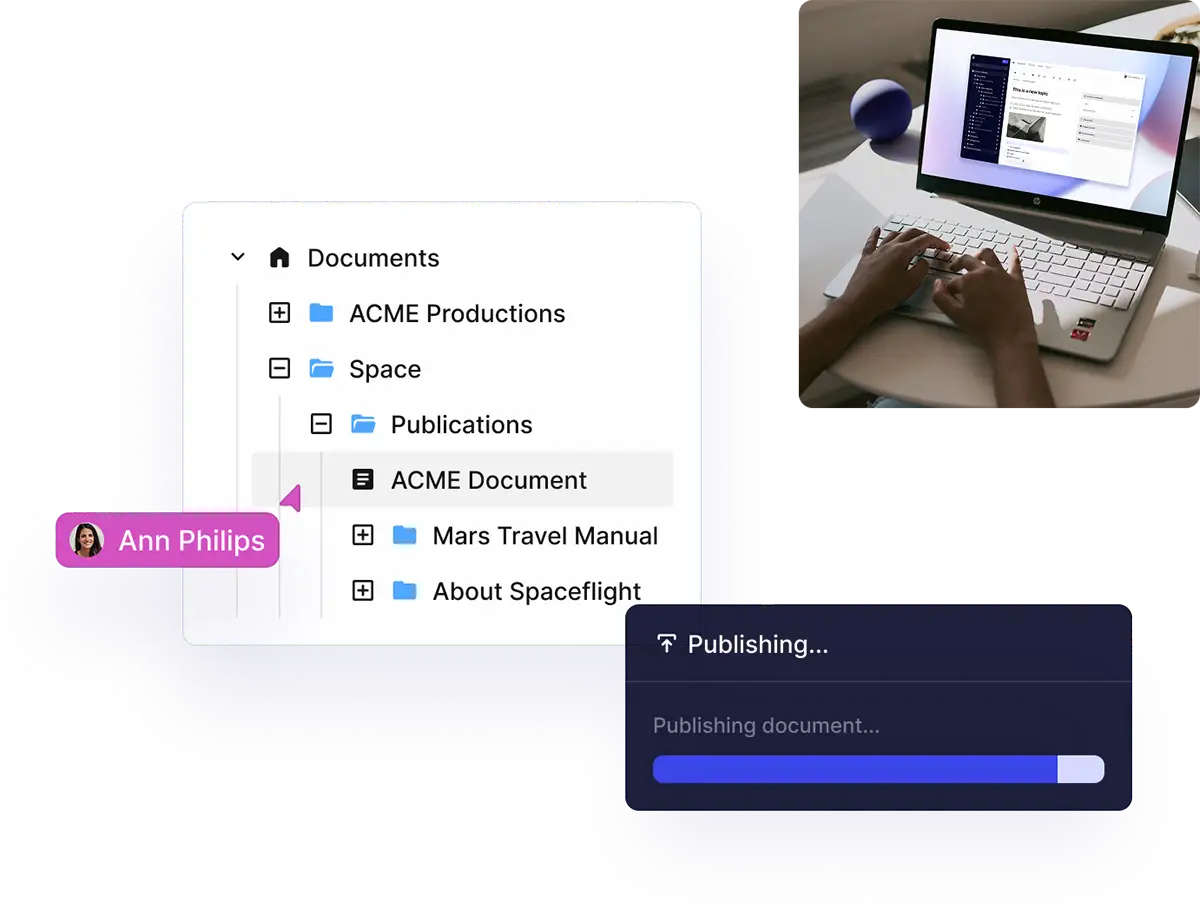
When you switch to structured authoring in a CCMS, content is modeled – lifting the burden of document maintenance from your team. Topics, components, and metadata define how information fits together. Reuse is systematic. Publishing is automated.
Migration is easier than it looks
Moving from Word, Google Docs, Confluence, or a HAT doesn’t mean starting over from a blank page. A planned migration lets you keep the content that still works, clean up what doesn’t, and introduce structure step by step.
Migration Made Manageable with Built-In Guidance
Paligo provides teams with guidance, import tools, and best-practice models – so migration stays manageable, predictable, and low-risk.