DITA vs DocBook for Technical Writing: What’s the Difference in 2025?


The DITA vs DocBook debate continues to dominate technical writing discussions. But here’s the thing: this comparison often misses the bigger picture entirely.
While both are robust XML content models, the real question isn’t which standard is superior. It’s how your chosen solution supports your business goals and documentation workflow.
This guide examines the practical differences between DITA and DocBook—and why the technical debate might be distracting you from what actually matters.
Key Takeaways
System capabilities matter more than XML standards. Choose complete documentation platforms, not XML features in isolation.
DocBook offers pragmatic flexibility. Clean implementation without the rigid topic typing that limits creativity.
DITA complexity creates real barriers. Built-in features often feel like coding rather than content creation.
Business outcomes drive success. Focus on authoring experience, collaboration, and measurable impact.
FAQ: Your Questions About DITA vs DocBook
DITA is an XML standard with structured topic types and built-in features like indirect linking and relationship tables. DocBook focuses on clean document structure without rigid content restrictions. The key difference: DITA embeds complexity in the content model; DocBook leaves it to the system.
Yes, for organizations that genuinely need its specific structured approach. But many companies find DocBook-based solutions more practical. The real question isn’t relevance—it’s whether DITA’s complexity is worth it for your specific needs.
Honestly? Yes. The steep learning curve comes from complex topic typing, relationship tables, and specialized features. Many technical writers find it feels more like coding than writing.
Technical documentation, books, and complex structured content. It provides a flexible foundation without enforcing rigid content models that can limit how you naturally want to organize information.
Look at your CCMS capabilities, not just the XML standard. Consider your team’s technical expertise, your content complexity, and your business goals. The best content model is the one that enables your team to create quality documentation efficiently—not the one that looks best on paper.
Understanding DITA’s Built-In Complexity Problem
DITA (Darwin Information Typing Architecture) was developed by IBM as an open-source XML standard for technical documentation. While it’s not a programming language, many technical writers find that DITA technical writing feels like coding—and there’s a reason for that.
The core issue lies in DITA’s design philosophy: it tries to be too many things at once. Features like indirect linking, relationship tables, and conkeyref mechanisms are built directly into the content model rather than handled by the documentation system. That means writers have to manage complexity that should be the system’s job.
The Complexity Challenges
Topic typing restrictions force content into rigid ‘task,’ ‘concept,’ and ‘reference’ categories that often don’t match real-world content needs. Writers end up reshaping their content to fit the model instead of choosing optimal formats for their audience.
Indirect linking complexity requires manual creation of mapping files to manage relationships between topics. Every link becomes a technical task rather than a natural connection.
Specialization burden sounds flexible in theory, but creating custom topic types generates additional work and complications that most organizations ultimately avoid.
Processing dependencies mean most implementations rely on the slow-developing DITA Open Toolkit, limiting what your system can actually do.
This complexity exists because DITA was designed for ‘lone writers’ working with files on local systems without database support. The result is unnecessary baggage when using DITA in modern collaborative environments.
DITA’s Complexity Challenges
- Topic typing restrictions: Forces content into rigid “task,” “concept,” and “reference” categories that often don’t match real-world content needs
- Indirect linking complexity: Requires manual creation of mapping files to manage relationships between topics
- Specialization burden: While theoretically flexible, creating custom topic types generates additional work and complications
- Processing dependencies: Most implementations rely on the slow-developing DITA Open Toolkit, limiting system capabilities
This complexity exists because DITA was designed for “lone writers” working with files on local systems without database support. The result is unnecessary baggage when using DITA for technical writers.
DocBook’s Pragmatic Flexibility Advantage
DocBook takes a fundamentally different approach. It focuses on clean document structure without embedding complex functionality in the content model itself.
As Norman Walsh, DocBook’s main founder, stated in 2005:
“There’s nothing that prevents you from writing modern, topic-oriented, highly modular documentation in DocBook.”
This philosophy reflects DocBook’s core strength: advanced functionality belongs in the processing system, not forced into content structure where writers have to manage it manually. This creates a cleaner foundation that’s easier to work with and more adaptable to different organizational needs.
The benefits are practical. Clean implementation separates content structure from system functionality. Flexible authoring doesn’t force writers into restrictive topic types. System independence means you’re not tied to specific toolkits. And the pragmatic focus emphasizes content quality over rigid structural compliance.
The DocBook committee deliberately chose not to implement topic typing. They recognized more value in a pragmatic and flexible content model that adapts to real content needs rather than forcing artificial constraints.
The Real Business Cost of XML-Focused Decisions
Organizations that prioritize XML standard debates over business outcomes often face significant operational challenges. Here’s what real-world DITA implementations reveal about what actually determines documentation success.
Unsatisfying authoring experience: Technical writers struggle with systems that feel like coding platforms rather than content creation tools. Creativity and productivity suffer when every action requires navigating complex structural requirements.
Forced content restructuring: Companies reshape their writing to fit DITA models instead of choosing optimal formats for their content goals and audience needs. The tail starts wagging the dog.
Collaboration bottlenecks: Every minor XML change requires developer intervention, killing collaboration momentum and creating content silos. Writers become dependent on IT resources for basic tasks.
Poor end-user experience: Perfectly structured content becomes inaccessible when navigation and discoverability are compromised by XML rigidity.
Here’s a case that illustrates the problem: One company spent months debating a single new DITA topic type for ‘troubleshooting’ content. The discussion about structural requirements never ended. It was finally dropped entirely, and the team resorted to basic topic types with writing guidelines—achieving the same results without the XML complexity.
This is what happens when DITA vs DocBook debates distract from practical content creation needs.
Multi-Layer Content Strategy Framework
Effective documentation strategy operates across five interconnected layers, each influencing business success:
Layer 1 – XML Standard Foundation: Should be clean and robust without unnecessary complexity. The standard should enable content creation, not constrain it.
Layer 2 – Authoring Experience: Tools must enable content creation, not technical wrestling. Intuitive interfaces should hide XML complexity while maintaining structural benefits.
Layer 3 – Collaboration: Systems should facilitate teamwork across distributed contributors. Subject matter experts should be able to contribute without XML expertise.
Layer 4 – End-User Experience: Content delivery must prioritize discoverability and usability over structural purity.
Layer 5 – Business Impact: All decisions should align with measurable business objectives. Documentation should contribute to competitive advantage, not just compliance.
Companies that start with business requirements and work down to technical implementation achieve better results than those beginning with XML debates.
Why DocBook? Lessons from Years of DITA Consulting
Anders Svensson, Paligo’s CEO, spent years as a DITA specialist beginning in 2006, consulting on software implementations, customizations, and system evaluations. His journey provides valuable insights for organizations facing this decision.
Despite extensive DITA experience and riding the initial hype around this content model, the Paligo team chose DocBook for strategic reasons. They found DocBook provided a much cleaner model with a mature processing framework that didn’t ‘get in the way’ of system development.
What Real-World Implementation Experience Revealed
Specialization complexity: In years of consulting, no company actually wanted to create specialized topic types. The architectural burden and ongoing maintenance requirements consistently deterred organizations from customizing DITA structures.
Processing constraints: Most DITA implementations depend on the slow-developing DITA Open Toolkit, limiting performance and feature possibilities.
System vs. content model roles: Advanced functionality like relationship management belongs in the system architecture, not forced into content structure.
The decision became clear: build advanced functionality into the system where it belongs, rather than forcing users to manage complex XML structures manually. This approach enables intuitive features like drag-and-drop taxonomies for creating topic relationships, with automatic detection and linking across all reuse contexts.
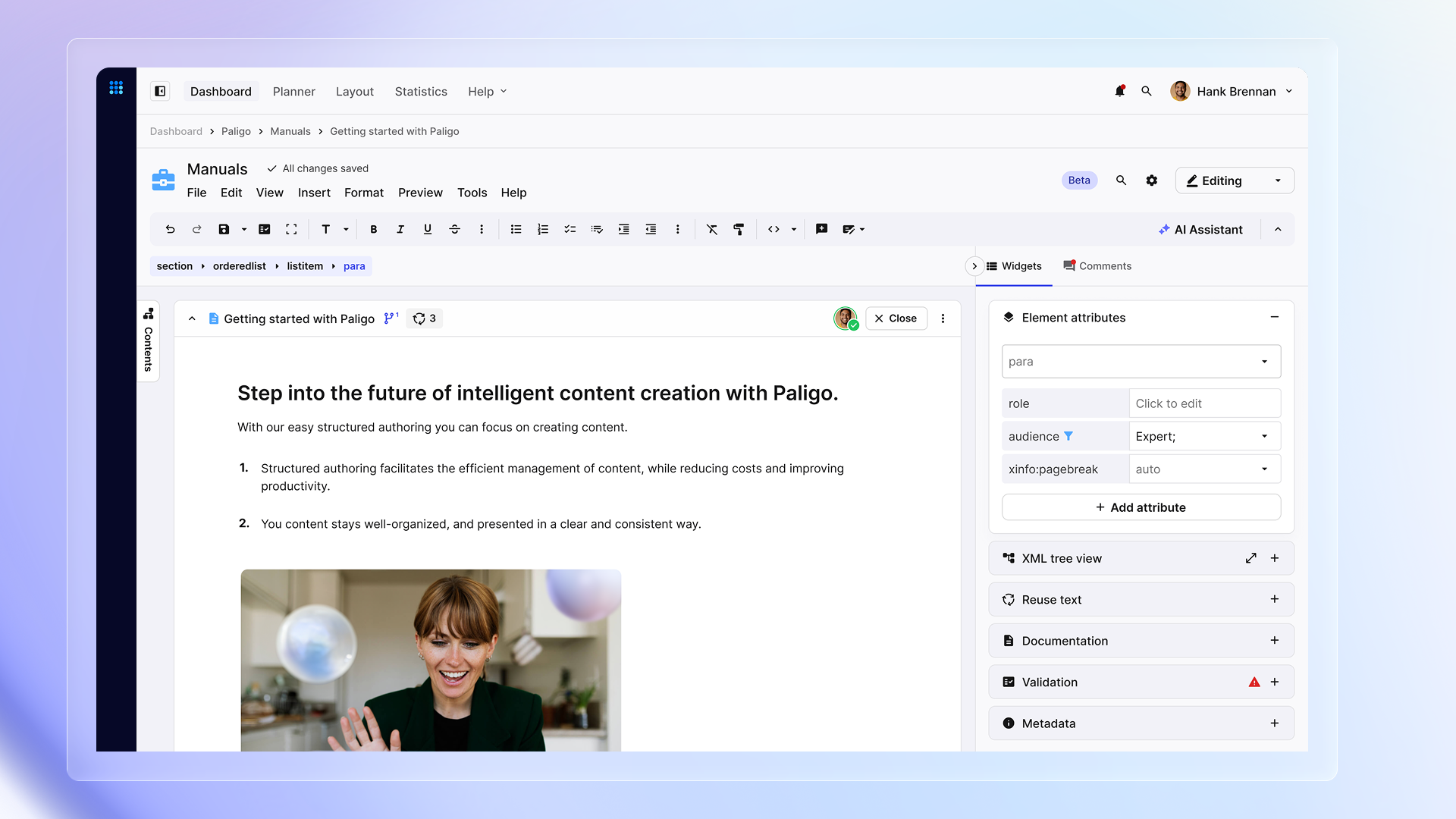
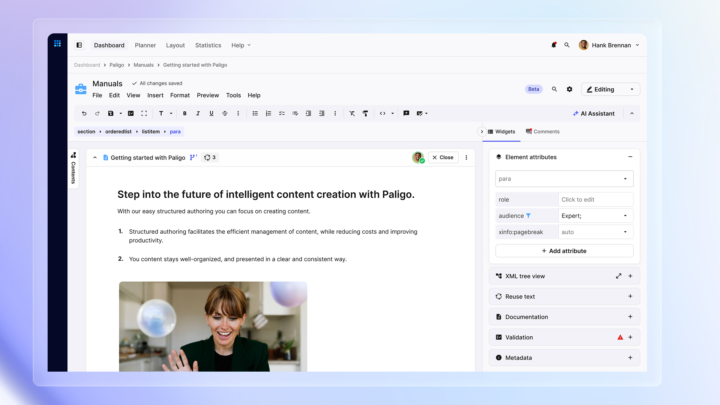
Paligo’s DocBook implementation hides XML complexity behind user-friendly editors while maintaining the structured foundation necessary for robust technical documentation solutions.
Making the Right Choice for Your Organization
When evaluating DITA vs DocBook for your documentation strategy, focus on the capabilities of the CCMS rather than XML standard features alone. The content model should support your workflow, not dictate it.
The most successful implementations prioritize business outcomes over technical purity. Organizations that choose systems based on authoring experience, collaboration ease, and alignment with business goals achieve better results than those focused solely on XML standard comparisons.
Consider your team’s technical expertise honestly. If writers struggle with the complexity, even the most sophisticated XML standard won’t deliver value. The best content model is the one that enables your team to create high-quality documentation efficiently.
Beyond the Debate: What Actually Matters
The DITA vs DocBook debate ultimately misses the point. Successful technical documentation depends on choosing complete systems that handle complexity behind the scenes while enabling intuitive content creation.
Paligo’s DocBook-based implementation exemplifies this principle—delivering structured authoring benefits without the burden that often frustrates DITA technical writing teams. But the key lesson applies broadly: prioritize user experience and business outcomes over technical purity.
Ready to evaluate documentation solutions that put tech writers first? Consider systems that deliver structured authoring benefits without forcing technical complexity on your content creation teams.
Stay ahead in structured content
Get the Paligo Pulse once a month.

Share
Author