The 4 Biggest Challenges (and Opportunities) for Technical Writers in 2026


For technical writers, a new year brings new challenges and opportunities driven by evolving technologies – hello generative AI – expanding global audiences, tightening regulations, and increasing demands for better customer experiences.
This article examines four major challenges that technical writers face and how structured content and a component content management system (CCMS) can help address them directly.
1. Adapting to AI and Emerging Tech
Technology changes faster than most documentation teams can keep up. This is so much more true with generative AI. Technical writers are thinking about generative AI from two perspectives:
- Writing with AI: Leveraging AI tools and technology to make the writing process more efficient.
- Writing for AI: Creating content that is easily consumed and understood by AI to support AI assistants and answer engines.
Writing with AI
Writers are facing the same concerns that content marketing writers and journalists are dealing with – losing their jobs to AI. As technical writing platforms (CCMS) incorporate generative AI capabilities to support the writing process, some writers are concerned that they may soon be replaced.
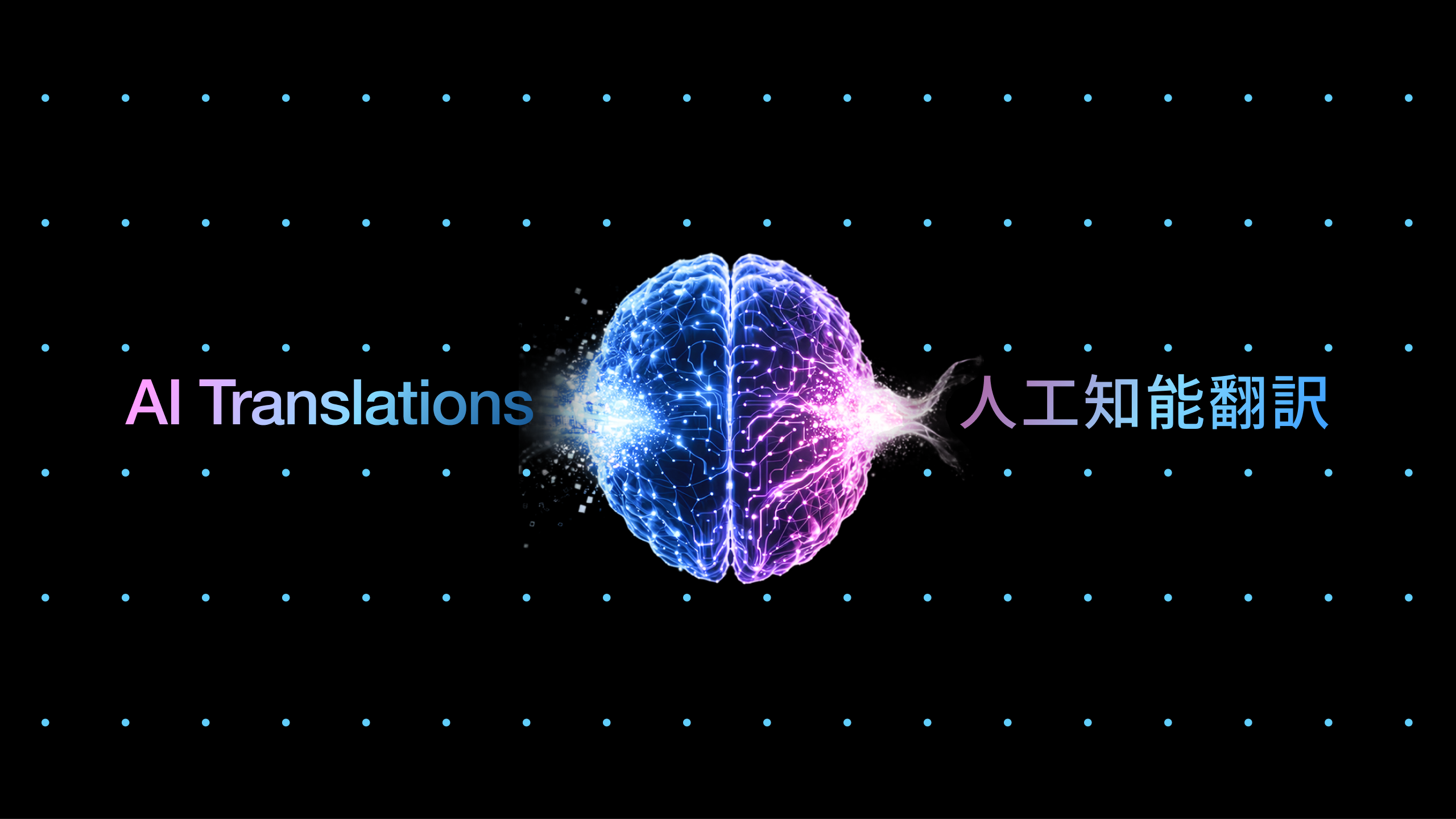
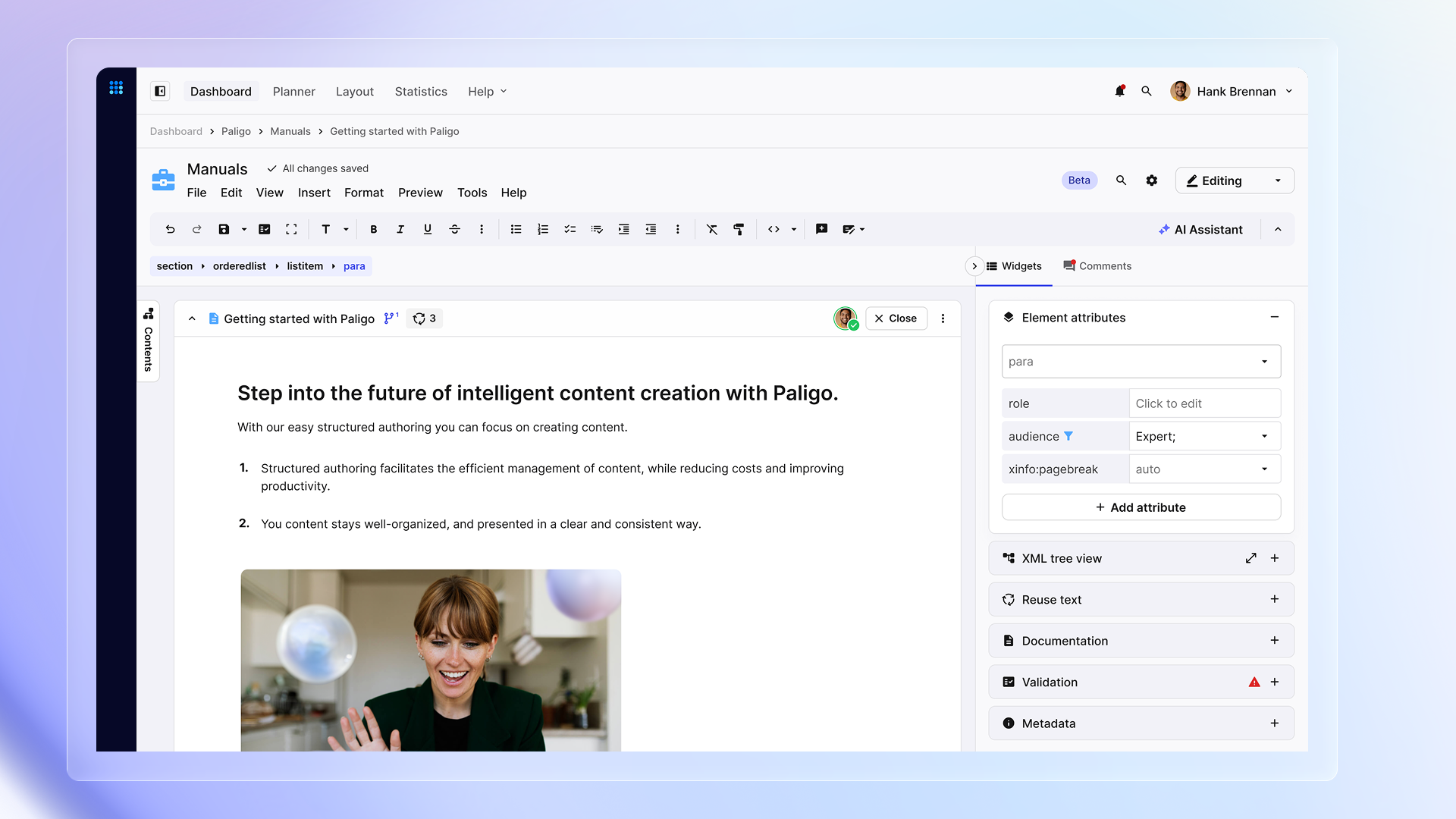
Paligo doesn’t think this is true. Generative AI presents technical writers with tools to help them do their job more efficiently, but it won’t replace them. Instead, what you will see is a hybrid writing workflow that incorporates genAI tools into the writing process, such as automatically tagging and applying metadata, translating content, and finding or suggesting content for reuse, while maintaining the writer’s full control over what happens.
Constrained budgets and limited resources require technical documentation teams to do more with less. That’s where generative AI can help. It can take on some of the more time-consuming tasks (such as applying metadata and translating content), allowing technical writers to focus on creating content that is accurate and easy to understand.
Writers can assume an editorial role that AI cannot, as they understand how a product works. They can collaborate with subject matter experts, such as developers and product managers, to ensure the accuracy of the documentation.
Writing for AI
Technical documentation is no longer only for customers who use products. Publicly available technical documentation, such as Help and Resource Centers on a company’s website, is also ingested by AI answer engines (i.e., ChatGPT, Perplexity, Claude) that people use to research products and learn how to use them.
Companies are also adding conversational chat experiences, like Kapa.ai, to their Resource Centers to make it even easier for customers to find answers.
These AI chatbots ingest all of a company’s documentation and provide easy-to-understand and follow answers to questions, like ‘How do I publish content to my Zendesk knowledge base?’ or ‘How do I connect individual publications to my FluidTopics CDP?’
What this means for technical writers is that they need to not only write content that’s easy for customers to understand, but they also need to write content in a way that makes it easy for an AI answer engine to accurately ingest it and return the right answers to questions.
Writers will not only create documentation but also define the instructions that AI uses to interpret and serve it accurately.
Structured Content Helps Writers Write for AI and Write with AI
Technical writers who use a structured content model are best equipped to write with and write for AI.
This is an important point: Outdated or inconsistent documentation doesn’t just create confusion; it can lead to user errors, security vulnerabilities, and poor customer experiences.
The key to keeping pace is using a structured content model that helps you future-proof your documentation.
A structured content model organizes documentation consistently and separates content from its presentation. The separation of content from layout and publishing channel enables two things:
- Technical writers can write and manage a single version of the content (single source) and reuse it across multiple publishing channels and formats, including the Resource Center, in-app help, downloadable PDFs, and customer support portals such as Zendesk and ServiceNow.
- AI answer engines and other AI assistants can ingest well-structured, consistent, and accurate content, accelerating training processes and improving performance in summarization, translation, and question-answering tasks.
A structured content model protects your information from becoming obsolete as technology evolves.
Why Use a Component Content Management System
The best way to implement a structured content model is with a component content management system (CCMS). A CCMS stores content as XML, a widely used markup language, which enables the separation of content and layout. This enables technical writers to publish the same content without needing to rewrite it for each channel or format type.
A CCMS supports:
- Content reuse: Write once, reuse across manuals, FAQs, and knowledge bases.
- Centralized management: Author, organize, collaborate, and publish content from one system.
- Integration flexibility: Connect easily with other enterprise systems, including translation management, learning management, and more.
Unlike standalone XML authoring tools, a CCMS provides comprehensive lifecycle management of technical content —authoring, collaboration, version control, publishing, and reuse—all in one place. This provides documentation teams with a stable foundation for managing content that is ready for anything the future brings.
2. Delivering Multilingual, Culturally-Aware Experiences
As organizations expand globally, technical writers face another significant challenge: creating documentation that is effective across multiple languages, regions, and cultures.
Localization goes far beyond translation. It requires maintaining consistency while adapting content to local terminology, cultural nuances, and compliance requirements.
Why a CCMS Simplifies Translation
A CCMS streamlines global content management by keeping source and translated content in one system. It can either manage translations internally or integrate with external translation management systems (TMS).
This unified approach enables:
- Granular translation workflows: Translate only the specific topics or components that changed.
- Reduced costs and errors: No more transferring files between tools.
- Consistent terminology and tone across languages.
As Paligo Solution Engineer Roger Gelwicks explains:
“When your content changes—say a few words or an added paragraph—translators don’t have to redo everything from scratch. They focus only on what’s changed, making updates faster and more cost-effective.”
With a CCMS, localization becomes an integrated, efficient process that supports accurate and scalable multilingual documentation.
3. Managing Regulatory and Security Complexity
Industries like healthcare, finance, and manufacturing continue to face new and evolving regulations. Each new requirement means more documentation—and higher stakes for accuracy.
Technical writers are the bridge between complex legal frameworks and clear, usable instructions. To keep pace, they require the right tools to maintain compliance, ensure audit readiness, and manage version control.
How a CCMS Helps with Compliance
A component content management system centralizes all compliance-related materials—regulations, policies, SOPs, and guidelines—within a single repository. Teams can:
- Ensure that every stakeholder has access to the latest approved version.
- Maintain audit trails for regulatory reviews.
- Easily update and republish content as rules change.
Using multiple tools increases the risk of outdated or inconsistent compliance documents, especially when translation is involved. A CCMS eliminates those gaps, ensuring every update is tracked and distributed correctly.
Staying aligned with current regulations protects organizations from legal and reputational risk while building a culture of transparency and responsibility.
4. Turning Documentation into Product Experience
Technical documentation teams and technical writers now play a crucial role in delivering exceptional customer experiences by helping customers use products more effectively.
Today, writers struggle to get content written, approved, and published in a timely manner. Some documentation teams struggle to keep up with the frequency of new releases and updates, which occur more often due to cloud-based infrastructures and internet-enabled updates.
A hybrid AI + writer workflow empowers technical writers to spend more time creating the right documentation and analyzing how customers utilize documentation.
For example, an AI assistant (like Kapa.ai) that provides in-depth content analytics helps technical writers:
- Identify gaps in documentation
- Learn what information customers search for the most.
- Identify trends in queries and pain points.
- Track and analyze user feedback.
By 2026, successful documentation teams will rely heavily on analytics dashboards to measure content performance, search success rates, and AI query effectiveness. Writers can use this information to inform documentation priorities, focusing on the content customers want and need.
A component content management system that incorporates generative AI will help writers make updates faster, resolve conflicting versions more easily, and work closely with subject matter experts to create content that customers need, in the channels they prefer.
If customers can’t get the right answers or understand the information, they lose trust in the product and the company and will have no problem switching to a competitor.
Turning Challenges into Opportunities
Every new year brings uncertainty—but also opportunity. Technical writers who adopt structured content, generative AI, and utilize a CCMS as their foundation gain the agility to adapt to technological shifts, expand into new markets, meet compliance demands, and, perhaps most importantly, deliver the content needed to create experiences that customers demand.
With the right tools and processes, documentation teams can stay flexible, future-ready, and positioned to thrive in 2026 and beyond.
FAQs: Adapting Technical Writing for the AI Era
1. How will generative AI change the role of technical writers?
Generative AI won’t replace technical writers—it will empower them. By automating repetitive tasks such as tagging, translation, and content reuse, AI enables writers to focus on what machines can’t: accuracy, clarity, and collaboration with subject matter experts.
2. What does “writing for AI” mean in technical documentation?
Writing for AI means structuring content so that AI assistants and answer engines can easily interpret it and return accurate, helpful answers. Well-structured, metadata-rich content helps ensure that tools like ChatGPT or Kapa.ai can respond correctly to customer questions.
3. Why is a Component Content Management System (CCMS) essential for documentation teams today?
A CCMS centralizes content creation, translation, and publishing in a single location. It enables writers to manage a single version of each topic, reuse it across multiple outputs, maintain version control for compliance, and integrate with systems like translation or learning management tools.
4. How does a CCMS help with localization and translation management?
A CCMS supports granular translation workflows—translators only update what has changed—reducing costs and ensuring consistent terminology across languages. It integrates easily with translation management systems, making multilingual content scalable and efficient.
5. How can AI and analytics improve customer experience in documentation?
AI-powered assistants and analytics dashboards reveal how customers search and interact with documentation. Writers can use those insights to fill content gaps, prioritize updates, and continuously refine user experience—turning documentation into a key part of the product experience.
Stay ahead in structured content
Get the Paligo Pulse once a month.

Share
Author