
Back to Webinars
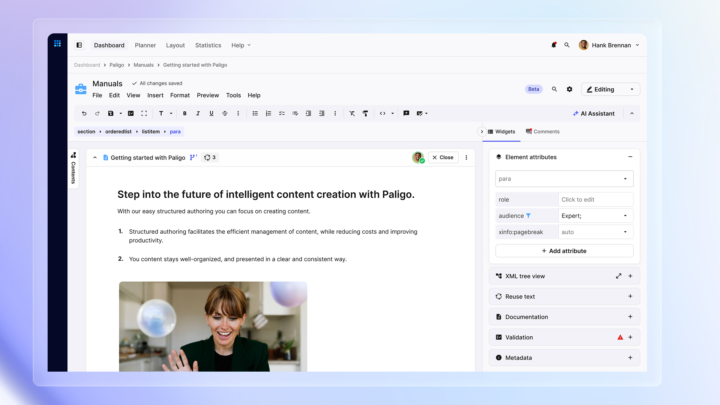
Hello everybody, and welcome to the webinar today. My name is Clara, and I'm on the marketing team at phrase and I will be facilitating today's session where Grace and Polygo come together to talk about bridging the strategic gap between technical content and translation. Now I have the pleasure of introducing you to our speakers. Today, representatives of, Polygo and Freys. We have Friedrich Correct, and experienced professional in developing and structuring highly technical documentation within the telecommunications industry. As well as in migrating large technical projects to a component content management system. Currently Frederick is working as an information architect, technical writer at Palico. Hi, Frederick. How are you? Hello. Thank you. Hello, everyone. Thank you. Happy to have you here. And representing Freight we have Micloch Urban, our enterprise solutions architect. Mickloch has, wealth of experience in the localization industry. His skills vary from managing to engineering roles. And in his most recent role, he has been mostly involved in architecting solutions for major localization buyers. Hi, Michash. How are you doing today? Hi, Clara. Hi, everyone. Good to have you here. Great. So this is awesome. So now let's, get into the topic. And without further ado, you can take it away, mclash. Yep. Thank you very much. So what are we going to talk about today, David Frederick, is is, oh, this is the agenda. First of all, I would like to drive you through the generic content pipeline, how it works. So just to have a, overview of the whole thing. And then we will go, into each part of this pipeline and, and, discuss how to design it, how to design a customized pipeline. Then we will have a couple of, words about how to set up things, migrating your content, and possibly your localization data into these platforms. And finally, we plan to showcase how this pipeline actually works, on on two use cases. So that's what we will cover today. Before going into the details, what we are talking about here is to implement a new technology. I mean, you implement a new technology that already comes with change management practices. And therefore, it is essential that you keep the the technical changes, the process changes. As minimal as possible. Of course, many times you can't get away without any, changes into the processes, but the the major goal would be to keep them intact. How to do that is, the the best practices would say that you have to review your business processes at a business level and not a technical level. You talk to your stakeholder internal acts on linguists, content writers, whoever responsible for the content, and, discuss why they do certain steps and understand the roles, what they do in their, in, in the content pipeline and, how this process builds up from bits and pieces. You you would develop like a racing matrix as well to that defines the processes and the governance of that process. So once you you understand your business processes as they are. You would also want to, review where you wanna gather like, in, in a couple of years time, let's say, what was your vision in terms of the, the content pipeline? And then you can go out and discover, the technologies and see which technology fits the best way to do these processes that you mapped out, in initially. So with that, let me go into the content pipeline. How does it work? And and this is just really to set the ground. There there are content writers, right, or content, editors who create the content, into and and publish it into a con component content management system. In our case, in this stack stack, it's gonna be Polygo. Right? So that's where the condon lives. This is the system that that governs the content all through its life cycle from creation to publishing and further. If you wanna make this content multilingual, then you need to, integrate the system with the transition management system. In our case, it's gonna be freights. But we need to, ideally, there is an integration that seamlessly picks up new content or changed content from the content management system and transfers it to the transition management system where the content is getting localized via a workflow that makes an ideal combination of of, machine translation tools and human translation, and and make sure that your content gets to the right level of linguistic quality, for each use case. Of course, once the translation is ready, sorry. Just go back for a second. Once the translation is ready, the same connector should pick up the contents from the translation management system and transfer it back to the component component management system to have a mount multilingual content base. And when the time comes, the CCMS will publish the content, to the right platform, let it be a website or some other, platform. So with that, let me give the word to Frederick who will drive you through the Polygo side. Thanks, Nicholas. Yes. And a little bit of repeating of what you mentioned here before, but looking at it from a component content management system, a CCMS side. If you want to choose to either switch from a CCMS to another CCMS, which happens quite often. But in a lot of cases, you would also switch from unstructured authoring. We're talking about where documentation, other types of formatting to structured authoring XML documentation. There are a couple of things we have to keep in mind, and we want to make the process as smooth as possible. And that doesn't mean let's throw away everything we are currently doing, and let's transition to a completely new system. It mostly means Again, let's look at what we're already doing. What are we doing well? What do we like with some of the procedures we are having? And what are the things that we kind of want to get rid of, but this giving us the most issues. So it's important to map out those different workflows what we want and what we want to keep and what we want to change. And one of the things to keep in mind when you do that migration is Not everything that we want to transition from one workflow to the other will have a one by one mapping. That means that even though we lack a certain procedure, we are changing our toolset. We also have to change our mindset a little bit. So We always have to make sure to think about it healthily and think about what do we need to change, where do we need to make changes to get to that target state? And the target state is to move our documentation. Our content model are, translations to, nice workflow within the CCMS. We want to understand what we are currently doing, and we want to understand what our ideal targets state will be before we get into the procedure of choosing which program is going to help us best. Now, and secondary thing is since we're taught talking about the multilingual, content model here. Think about how our translation is going to work within that new system as well. So one of the things that you want to look out for, if you're choosing to choose a new CCMS or you're switching to a CCMS is do they have any potential integrations with already existing translation vendors? And for example, we're talking here and we're going to showcase the Polygo C CMS system that has, built in integration into the phrase system that will help maintaining those translations and maintaining your multilingual contact model make it that much easier. So it's something to take into account what are the possibilities and why we'll make it easiest for us to maintain those translations. And now I'll give it back to me class. Yep. Thank you very much. So in terms of the transition management, the the main tool of transition management is the so called transition memory that that kind of remembers what you translated. When you first translate the content, it is quite obvious that you have to translate the whole thing. Well, of course, you can use machine translation to to help this process, and I will get back to that. But once a content is translated, the TMS will remember it. And this, can be reused. So the next time the same content is localized, the parts that did not change will just make it automatically into the content. And, only the translation only the parts that will have been changed or that are new will be exposed for translation. This is what we call the data management. So talking about automations, obviously, it's, it's a great piece in in DMS systems. And I mentioned already that, you can combine machine translation and human translation in an ideal way that is mapped to your value of of to the value of your content. In your content portfolio, you can find, content that has high emotional impact on your customers, and so drive your sales. But you can also find, other content that may not need that meticulous linguistic process to to reach the goal, for example, you're using manuals and and and things like that. Or or even support, emails and things like that. So what you would consider is a value driven localization panel and, in each case, for each value bucket, let's say, you can choose the right mix of machine and humans working together. There's a beside technology, it's also very important that you set up your, vendors, your linguists, and even your local market reviews or reviewers, who who reside within your company, maybe, but at, multiple locations around the globe. So that's, our considerations in terms of TMS, and I passed back to Frederick to talk about how this gets published. So talking about publishing pipelines. It's simple, but it needs to be maintained quite thoroughly. So when we talk about publishing pipelines, we talk about what is the end form agreement we are wanting to pro pro produce here. Are the PDFs that we have to send to our customers that we want to maintain online help desks. Sometimes, we have to assign the word format. And All of those different formats depend, first of all, on the system you have chosen, that to migrate to, what does our CCMS support, what is it best at, And it's also important to know how to style these different items. Styling is always a little bit different from program to program. For example, we talk about Polygo. It has built in layout editing capabilities. All our CCMSs require you to do the delayed layout on the hosting part. Most importantly, when we talk about publishing pipelines, is testing. Whenever we are creating documentation and we are ready with writing, we're ready with translating, and we want to get it out there to the world, We always want to make sure that we have a publishing pipeline that allows for testing and configuring everything so we can see if there is any mistake. So, publishing pipelines, basically rely on getting that layout set up, getting your format set up, and testing those outputs beforehand. Another part that I would like touch up on, that is very important when we talk about, transitioning to structured authoring and to CMS is that planning of content migration. And in most cases, it would be the most dreaded subject because content migration is never the thing you want to do the most. Whenever you get a new shiny tool, you want to start working on it, you want to start editing, producing new content. But what do we do with all our previous content that we have already written? We want to migrate that. We don't want to redo that in most cases. We just wanted to highlight a couple of things that can be quite important to keep in mind when you plan those migrations. And the first one is don't shy away from potentially inviting a third party consultant to do the work because migration can take up a lot of time that is something that has to be taken into account. And if you have to edit content very frequently, it might be beneficial to get somebody to do the migration for you. And you can talk to your CCMS vendor about the possibilities are there. Another thing that I think we should not shy away from is post import cleanup. We can import and some CMS, programs like the legal offer us some default, import opportunities for existing file formats. But there will always be a little bit of post cleanup in terms of cleaning up, maybe some layout issues, maybe some elements that got scattered, And it's important to make sure that you take the time to do that cleanup because it also gives you the time to think about, okay, how can I use my documentation within my system now? The last point you see here taking into account content reuse, variables, profiling. All the most important parts I will give you the benefits of our CCMS. Those are the things you can start to think about when you're doing that cleanup. So you kind of get the cleanup done, but you also start thinking about the future. And we also have to think about, data translation, and that's Mikler starting to talk about. Exactly. So, I have already discussed, that you you actually keep data in a TMS system. And, obviously, to start using a TMS system, you would need to, set up the data if you have anything already up from Let's take transition memories a bit back and and, talk a bit about, terminology. One major risk with global content is that your brand integrity gets breached, and and the major safeguard on your global brand integrity. Is the use of a multilingual terminology. It means that your translators and reviewers have warned and checked to use the right expressions that you approved. For example, your product names or, important terms, within the, your industry. Are used correctly and consistently across each and every content. I said translators, right, translators are humans, And, of course, you applied translators, human translators were the most, important content pieces, most of your marketing But at the same time, you may also choose, to apply machine translation, to certain content types. And in that case, it, it, terminology needs to go further. And it, it also should be an integral part of the machines driven processes. The machine translation needs to use this terminology. And if it fails, those segments should be exposed for human review, for sure. And that's something that the TMS can help you, to set up workflows where it not only applies sternology, but also check that. And if there's any breach, in terms of your, brand integrity, than a warrant translator and expose it for review. So, that's about terminology. Now let's take a look into translation memories. As I said, these are, this is the asset that keeps, memory about your existing, past translations. And this is that makes it possible to leverage your existing translations into the new content. Now if you have bininal content from the past, you may want to, import it and migrate it to to your new, technology stack. One way of doing it if you never use a TMS system is to align, the existing viral corpora So that means that you just take, your source content and target content side by side and align these sentences their automatic tools, of course, to drive this. But if you, have used a TMS system before, then there are formats that facilitate this export and import to a new system. Of course, it may come with a loss but, you can trust your CMS provider or even your lsp, vendors, linguistic vendors, to help you, e, to migrate the content, with with the with the least loss possible. So, yeah, with that, I think we kind of finished what we wanted to talk about in the nutshell. Now we will put this whole thing into into practice. And, So once we prepared legacy content, we imported the content into, the CCMS. We cleaned up the content and prepare the, bilingual data in the TMS and the ophthalmology in the TMS, then we can start piloting the first content in, in, in, in this new text stack. So that's what we are going to show how the content goes through, the system. There are two use cases that we will cover. The first one it well, actually, it's about the company. It's a company that, went global, and, it already supports certain markets, but this time, it is trying to break into a new market. And, before breaking into this new market and launching the products in this new market, they wanna do a market research But to do the market research, they need to have some kind of a, let's say, good enough presence in content wise in that market. So that's what we will, a demo here with Frederick basically, a content will go through for this market. I think it's German. To, get translated automatically via the TMS and with that, let me give the work and I think the screen as well to Frederick. Thanks, Nikosh. Yes. Exactly. So let me get the Polygo instance up and running here, and let's actually make it a bit bigger. So it's easier to see. What we will be doing today as Nicholas just explained is we will show you how the integration between, a legal and a phrase for and how we can send over a documentation set and quickly get it translated via the TMS. So in the background, what I already did is I set up the integration with a phrase, and you might have seen the little screenshot on the slides as well. It's just a quick, IP connection. And we will be using this documentation set. So just something to note here, and I can show you on the left hand side in Palego, this document exists out of a couple of topics. So I'm going to send out the translation for the full document, this time. I already have German added as a language, but just in case we want to know, I could always add more languages or remove languages via the language interface. But, currently, we will be working with, German for our first test here. So what I can do is I can open the interface and go to translations. And I can see here my English is, my source language is one hundred percent ready. German is a new one that we want to, activate, and we need to translate it. So I can dig directly from this view, export my translation. And let's do it from here, and then I will import it back in the translation view itself. So I can select export translation and send my German to, phrase, which will automatically pop up since I've integrated with them. And from here, I can choose a project that we have subbed up together with phrase. So we will choose the webinar integration right now, and I can just I don't have to set any due dates because we've entered immediately. So I can just export my format, and this will be, exporting it via XLIT format. So there we go. I also get a local copy in case I want it. But that's it, on on our side. I can open my translation view here and you'll see my status is in translation, which means that other writers will not be able to edit it while I am actually editing content. So I can now go to my translate field where I can see here, I have my English version on the left side in green because it has already been approved, and my German version is still in English. So let's export our translation that we already have done that, so I can import it back since it goes quite fast. So what I can do is I can select phrase again from the import. And I can see here immediately, these are the languages that phrases ready for me. Spanish, I don't need at the moment because it's for our second demo, but Sherman I want. So I can just select that one, import it, and let the CMS handle the rest. There we go. That imported it back in. And then what I can do is I can just refresh my system and I can see my German popping here. So what I can do now is if I have in house translators, I can go over one by one to set the translation as complete. Editing it if it's necessary. But since we know the phrases are a good DNS, we can just approve this and know that all our documentation is ready for translation. So I set my translation as complete, and my journey is done. It will re index it, and it will settle as a hundred percent. So I can now publish this out for a potential German customer. Let's talk about the second phase of our demo, which will be a little bit more complex instead of going to German what we're going to do this time is we're going to use a Spanish translation that we already prepared for us. But what I will do is I will make a couple of small adjustments to the first topic just so we can see how phrase handles, small changes without having to retranslate everything. So I will do that on my side, and then I will give it back to Mickler. So the first thing I will do for this test is I will open this topic, I will put it back to work since it was, in translation before. And let's make a change. Right? The first thing that I want to change is, content model platform. We can call this one bone and content system. For example, and then a secondary thing we can do is let's add a no paragraph and say. There we go. A quick update. I'm happy with that so I can save this. And I can go over the workflow again. So what I'm going to do is I'm going to go to my folder here. I'm going to Again, of this one in translation, since we have a new topic with some change text. So I'm just telling the system, hey, there were some changes. And you can see it reflected that immediately. Everything is not fully approved yet. So what I'm going to do now is I'm going to quickly open my translation for you again. I'm going to say the new style that we just written before. In English, I'm going to approve. That one is totally fine. That's a step from, and then step two is I'm going to go to my Spanish, and you can see Alego recognizes that we have made some changes and added something. So I'm gonna send this over to phrase again. Export the Spanish version to phrase inside their folder. Export. And that's it from my side. Will stop sharing my swim and because you can take over again. Thank you very much. Able to see my, phrase screen. Yes. Thank you. So what happened in the background, this project has been filled with content. So, what you can see here, this project is is open, called bollywood integration for webinar. It has target languages, German, and Spanish set up. It has some metadata that we are not going to discuss now. And we have these two files here. Right? The first one is the Gemini that, I didn't present because everything happened automatically in the background. Actually, it got completed automatically. And, if we go in there just for a second, then you can see that same machine translation inserted into the, screen, into the grid, s what Frederick showed you. On the Polygo side. On the other hand, we have this Spanish file appeared here, and let me just refresh the screen now. And it was recognized automatically in the background. It requires a different workflow. So in terms of the German one, the workflow was to automatically translate using machine translation because that was the requirement by the, by, the, the documentation department. Right? They they just wanted to have a good enough translation to shoot it out so they they can run the, the market analysis. On the other hand, for Spanish, which is an established, market. They need good translation. And therefore, anything that is new, it needs to be assigned to a provider. So in this case, you can see that the automation picked up this content. The status now is emailed, and that means this user, well, it's called trustator test, is assigned to this job And, if I log log in in the name of this user, I would see this job, for editing. But I will simulate this now from this admin screen, and I just open this file up for editing. Okay. There we are. Let me just put this one a little bit down. Okay. So what what you can see here is we have segmented data each segment is, I don't represent a sentence or some kind of, like, a title that's what you see here. And for many of the segments, you see the color is green, and it says like a hundred and one or a hundred person. What does it mean that these translations exist in the translation memory? If I click one of those, You can see that, this one hundred percent we call it a match comes from a transition memory called Polygo integration that was created February the eighth obviously, when we prepare for this presentation, and you can see some other metadata and information about this, this segment in the transition memory. Okay. So most of the content that was already translated is stored in the transition memory. And you can see that we have a lot of those segments that are one on one matches. Where there is a change that Frederick showed you to that he added it. There, we have different numbers. We have this one, This one shows that we have an eighty six person match. What does it mean? Well, eighty six person match means that there's some change in, the, in the content. And here you can see the actual change that Frederick did just minutes ago. So this documentation platform has been, deleted. And instead of it, it's a component content system that was added. So as a translator, I can see this change. I can see that it's an eighty person. So I need to edit it. I need to add that fourteen person, to, to match completely the new source tax. And that's what's gonna happen here. I translated it. Sorry for the, Lucy translation, but I let me just do it this way. Okay? I hit a contra enter, that marked a confirmed segment. It could be automated that all the rest is also confirmed, but you can also choose to go, to to to kind of leave them open and, even ask your, linguist to review the content. Or as sad. You can automatically confirm these segments, when the circuit free translation happens from the transition memory, the segments are inserted. Into the content. There's another segment, that shows fifty six percent, but it's underlined with this dashed line. What does it mean? If I click on it, you can see that this, translation actually doesn't come from a transcription memory. It comes from empty machine translation. And it also tells you that this machine translation, in this case, comes from Amazon translate. That's a longer topic who actually may how the engine is chosen and set up and so on, but let's, just mention that you can freely set up a number of, engines out there or you can use phrases on, phrase and extend the engine, even customized. So in this case, it's the Amazon translate that provided this translation. The fifty six person is, circled, quality estimation or QPS score. That's what we call it, the phrase quality performance score. This is a based on AI, system in the background that tries to identify any problems with the segments linguistically. So that would be a a marker, a pointer to the translator, how good the train station is that comes from the empty and if, how bad, he or she can expect. Okay. So from from now on, let me just translate this one and, close the translation. Sorry. I forgot to do something. Not close the translation, but I wanna complete the translation. So I just set it to complete it. Okay. So now if I close it, after the screen refreshes, you see that the transition is now completed. Of course, if I logged in as a translator test user, I would see only this job, but, let's pass the screen and work back to Shrader so he can show the final part. Thanks, Mikta. Let's see what is left for us to do, which is not not that much. So we are back at our document here. Everything has been handled in phrase. So I can just go again import our translation, choose phrase. I just need my Spanish version back, and I can import it. And the same procedure will happen. It will push in the newly translated content. I'm just gonna manually refresh that. There we go. And then I can say, my new changes look correct, so I can just set those as complete, and my new line has also been translated. So everything is ready and I can go ahead and publish these documents out both in English and Yeah. English, German, and Spanish. So that's kind of the workflow between, the Polygo and phrase integration. Are you ready for for questions now? Yes. Amazing. Okay. So I'll take over, the screen sharing. And let's have a look. Okay. Let's start from the top. And just a second here. Alright. Is the phrase TMS comparable to at us regarding functions in Clush? Yes. I I'm sure if, I'm in a position here to really, compare these tools. Right? Obviously, Travis is a competitor phrase And, well, if you check my link, then you can see that actually I used to use used to work for RWS. So I know a lot about it. They are competitors, similar functionality, similar purposes. Of course, the two tools have their own strengths and weaknesses. What I can say, phrase is a, concise, seed of tools that is, I think, are matched in the industry. It contains the transition interface the TMS system, transition memory, support machine translation. It's own proprietary machine translation. Is customizable. It is linked to, a number of other machine translation tools in has its, software localization, platform, phrase strings. It has a very robust analytics, support, on at three different levels, all the way to exporting all data into Snowflake, so that you can integrate it with your own analytics data coming from other areas of the business. And I I'm not sure if I left out the automation platform orchestrator, that is a low code in for a low code environment where you can, define all permissions. So that's what phrases, That's why I can tell you. Yes. Thank you very much, Nicholas. Another question by your does phrase have integrated software localization functions, for example, professor? I actually I actually answered the next two questions as it seems, so yep, phase three strings is, the platform that, is designed the rounds of localization. And let me take the next one as well. Is it possible to integrate Deepel in the transition process? Of course, Deepa is one of the engines that we are connected to, phrases connected to. If you wanna know more about it, I think it makes sense to discuss it offline and, talk more about what is the AI and MT offering of phrases Exactly. We can, we can get in touch afterwards as well to discuss in more detail. Thank you very much. Next question, by Sandra, what is the benefit of structured authoring using XML, both from a documentation and translation perspective? I I can take that one. So there are, of course, a lot of benefits, first of all, but one of My favorite ones would be definitely the styling if we think about structured authoring, especially if we have different corporate style guides, different customers that need be different formats like PDF HTMLs. They all need to be configured a little bit differently. And the whole benefit of structured authoring would be that we all write within XML. We give it we define what we write. If it's a paragraph or a procedure, and then we give it a styling at the end of the road. And this also occurs back to the translation, especially if we're talking about character based, languages, languages that are being read from left to right or right to left. A lot of restyling needs to happen there when you use, all our techniques like in word to do those translations. While in XML, we can just, again, as we just showed, show, send over the XLift, that the segments be translated, and we don't have to care anymore about the styling because that is only applied at the end of everything in the whole translation management. So I would say that is one of the major strengths of, structured r three in XML. K. Thank you. Anything to add to that, Nicole? Or can I move on? Let's go. Alright. Does phrase provide a preview that shows the translated text in the layout? For example, website, software, etcetera, proofreading in the two column design is often a challenge. Yeah. I I agree. It's, reviewing content, proofreading content as in its final format is is all always challenging it's, in a two column format. Yes, indeed, phrase has a preview area. That was the area that I was dragging down all the time, when I was presenting, if you remember. It was empty for the case because, with the Polygo integration, we don't have it yet, at the moment, it would be a question of the future. To implement it. But for many other connectors, phrase, have it, and also many fire types, phrase have such a preview. Where you can see the content already translated in its final form appear in the preview area. And you can, do the review there. If you click on one of the, verts, it will appear in the editor. So you can directly jump there and, edit the text there. Yeah, probably in a directed demo, it would be nice to show it. How it works? I mean, just back for a second about the structure of the XML content, Obviously, Aximal content is is a very good friend of DMS systems as well, as for an maximal content, it's easy to define, what to translate, what not to translate And that's exactly what happens in the background with Polygo integration. We are receiving Xima content in the background. And, that's phrase, phrase process that excellent content. Thank you very much. Next question from Philip, how long did it take to integrate the C CMS and phrase CMS as we saw it in the demo? And what are the preparations that need to be considered? For instance, besides the customized workflow, you showed for German and Spanish, I think this can we can answer that from both sides, so I can take it from the from the Polygo side It didn't everything we kind of showed you in this specific demo here. It it adding adding an extra languages or adding more languages would have been just a click of a button at this point in time. And connecting the integration as well we showed the slide deck a little bit before. It's as simple as just, as soon as you have a account at the phrase site, it's just putting in the details within Palego. We have an integration box. So, again, a couple of seconds. So in terms of the exec, complete, or phrase connection, yeah, a matter of a couple of seconds and knowing which languages you want to add to your documents. Micklas, anything to add from your side. Definitely. So, from from Freight's side, the sub included a, the project created, for, for this purpose and a automation in, written on orchestrator, the local environment, that selected the language based on the language apply different workflows. To be honest, well, if the question is how long it took well, a question of, well, if not minutes, but ten minutes, maybe. So this is not the time. The time really is to review the processes that you want to cover and understand those processes. That's why I started with that on the very first slide. It's the the technology to apply the technology, of course, it takes some time to set it up. Of course, it takes some time to migrate the content, but the most important part time consuming part is before the technology changes, to understand, as you're running and, how the technology can gather those needs. And then, you know, once there's a design, there's a plan then to carry out that plan is is the easier part. Okay. I don't see any other questions at the minute, and I think we are perfect, with time. So unless anything else pops up, I think we can wrap it up. So I'm going to thank you both of our speakers, Mick Walsh and Frederick, for the presentations, the demonstration and also answering the questions. And, just to let our audience No. Once we close this session, there will be a short survey popping up where you can let us know your feedback or suggestions for further topics to cover in our next webinars. So thank you very much, and have a great rest of the day. Bye bye. Thank you. Thank you, everybody. Everybody. Thanks for being blessed. Thank you for that. Thank you guys. Thank you. Bye bye. Bye.
Feb 22, 2024