
Back to Webinars
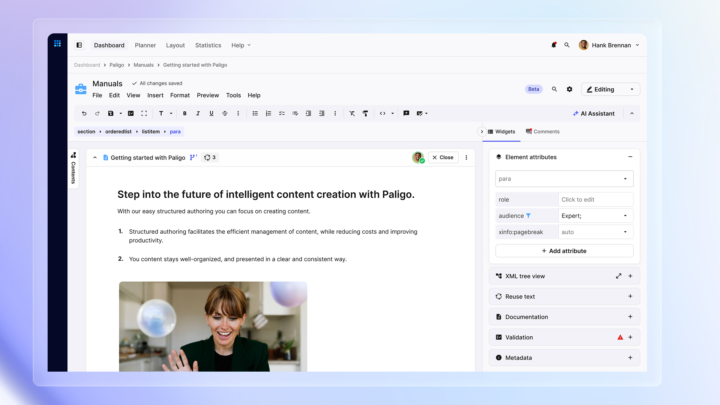
Hi, everybody. Good morning. Good afternoon. Good evening. Welcome to our greatest, you know, new webinar of all our features. There you go. Everybody can see me. It's full two thousand twenty. We're all very, very excited here to put over these new features, explain them to you. The way it's gonna work, we'll first explain the new features. You can obviously ask questions, but also at the end, you'll have a chance just to give us your general comments like we sometimes do at the end of these webinars. Actually, my favorite part of webinars. And maybe if we have some time for this general questions about the legal, and welcome to there's a lot of faces that I recognize in the past, a lot of new faces people. We don't know yet. You're all absolutely welcome. So enough of me for now, we'll carry on. And we'll do, and we will give you all our new features. Welcome everybody. We're really excited here at Palego to tell you the new features we have for fall two thousand and twenty. We'll get going straight away. We won't waste any time. First of all, there's obviously some people here maybe new to Palego. Let me just give you a quick rundown of our product. What it does and what it does for you, how can I help manage your technical documentation as well as other types of documentation inside your organization? So Bellego, first of all, it's built for teams. It's built for collaboration. There's efficiency and accuracy. This so many different types of content reuse. You can read the whole publication, a topic, a paragraph, a table, an image, chunks of topic, chunks of content together. And the structured authoring very simply allows a very consistent way to work with multiple authors, whether you're one, fifty or a thousand authors, working the same country all across the globe, you're all consistently going to work together. The translation workflow is hugely effective. I know that from personal experience with other tools that I've used that we very simply and quickly give the content to a translation management system in the format that they expect, you export, you import a new publish. You can even publish to your Zendesk salesforce, service now all directly from Polygo really makes that process very clean and efficient. It's cloud based So again, wherever you're working and all your all the collaboration team reviewers, authors, contributors, whoever it is contributing some element to the content, you're all gonna be working together via the cloud, obviously, with a very high level of security. And it's all in one solution. So we're creating, reviewing all the versioning, including branching, and the workflow. And a multi multi channel publishing. It's all built into one solution. There's no need to have a jigsaw puzzle. There's no need to leave the system to any of your core tasks for the cost for the content journey. You just use Polygo. We're a CCMS. That's a component CMS. A component content management system. It just basically means we've got all these different types of components that we can reuse. Multi channel publishing, we just discussed whether it's to your, maybe a PDF still, HTML five layout, your Zendesk Salesforce ServiceNow, or Freshdesk. Whether it's to a learning management system as a school file, or whether you want word files. It's all there from Palego, and the full word workflow is built in little bit similar to, let's say, Google Docs. You have assignments. People receive assignments. They then go and do their do their task as part of the collaboration side. It's all built into the product. Again, no need to leave the product to do any of your main tasks. So we've already discussed some of the integrations like the support platforms, but you can also integrate directly to put the content on your website or into the continuous integration that developers do you potentially to push your content to? With a bitbucket or GitHub or straight to Amazon s three, as your repose, good old FTP. It's all there. You can press a button and push the content out. We'll soon see with the API one of our new features. You can even take that a step further. Structured ordering we mentioned before, inherent consistency with a large team, an all in one solution. Pelego is applicable from the small, medium to large sized companies to the biggest enterprises. Because everybody realizes they get the efficiency of content. The revolution of Polygo is it's made what used to be a really complicated enterprise level system to set up and learn and maintain it's a simple cloud and start working and being efficient immediately. So now let's move into the new stuff at Bellego. The stuff we're really excited to present to you. We'll have a look at Microsoft Teams ServiceNow and our new API. For Microsoft Teams, as we're going to see, you're h gonna have Polygo move into your natural working environment. Just like in the previous release, we had a Slack integration. Now we've got Microsoft Teams integration. So everyone can get updated. The relevant information they need into their Microsoft three teams channel. So let's take a good look. What we're doing now is we're making a change in the title of one of our topics. And after that, we want to see what's happened in Microsoft Teams. So let's go and look in Microsoft Teams. And we'll see a notification in the system for the title changing in that topic. And there's a button so you can click directly from there into your Polygo if you want to go and perform some sort of activity as a result of getting that information in Microsoft Teams. Now another example, a typical workflow, is we want to perform a review, and somebody's going to get notified with some sort of question or point or get involved in that discussion. So we go into the review. You can see how simple the review is, but by clicking a button, get the bubble on the side, write your comment, bring somebody in, and click save. Now let's go back into Microsoft Teams. And see what happened, and we'll see that individual received a notification that they have a comment in a review they have to go deal with. Very simple, very effective, and very seamless again to how you work in your existing environment. So why is it important? What does what does Microsoft teams give you? More of a summary? So you've got direct messaging. It's more than just email notifications. We know that emails are sometimes useful, but they don't necessarily are the the main channel for communication within a company, possibly for your company, it's Slack or Microsoft teams and mentions, bring people into use again, the same type of environment you're used to. That's what Pulego is providing you. We don't were not recreating the wheel. We're bringing what you're familiar with into technical documentation that wasn't really available before Polygo. Push notifications. So you bring people in as you want to bring them into the discussions, and they communicate as a set communications are central across the company with Microsoft Teams as normal, everyone's informed of activities and discussions that they need to know about, where they want to know about them, and it's teamwork. It's all about with all the work that we're doing every every author now very much so collaborates with other people in the organization. It becomes transparent, and everyone receives the information where they need it and when they need it. For those companies who are already using service now, either for managing support or your internal IT tickets and have a knowledge base to proactively give that self-service content. You're gonna be very excited by this feature because we have a new integration with ServiceNow. You can offer your content in Plego. And push that content into service now into the service now full ecosystem for your ticket to flexion and other features that service now will give you. So let's assume we've written our content. It's been through the full collaboration process. The versioning is correct. We're ready to go. So just as a prep, we'll go in have a look quickly in the integrations inside Polygo for ServiceNow. And you will see that you need to put some basic information to set up the integration very similar to other integrations with a default knowledge base as well. And then you can press test just to make sure that the information you put in correctly, and you have a live real connection with your service now instance. So obviously the next step is we're going to go and publish. Let's publish from Plego. So we choose our settings. So we'll select the HTML output. From there, select service now knowledge, and you choose the knowledge base inside service now that you want to push to, and you have the option of also selecting a service now category. You can also use the regular settings we have Liga gonna push multiple languages into service now at the same time. It's probably also quite revolutionary to save you a lot of time with translations if you have multi language topics, content inside service now, or the profiling and variables, everything that Polygo offers, it's already here, we we can we can publish all that content directly to service now. And it takes probably just a few seconds maybe a bit long. If you've got ten thousand topics, maybe a couple of minutes. Not a long time in the in the large scheme of things, to push our content, to multi language content directly from Polygo into your ServiceNow instance. If we have a look inside ServiceNow, you'll see the content has gone into the knowledge base that we selected, we drill down, we can find the content that we pushed in there, the the whether it's text, images, lists, tables. It's all moving into your service now that you can now use that content as you would in service now and display it inside your knowledge base So offering self-service to your end customers, to your partners, your internal IT users, whatever it may be. Using Polygo for professional, authoring with ServiceNow as the support and IT platform. Watching ServiceNow in Action, you're going to get professional content management from Palego. We're gonna able to be able to enable your cell self-service content in a very efficient manner, single source information. So between different products, audiences, or other scenarios that you might need to deal with, And all the version in collaboration, multi channel publishing that comes together with Bligo, and obviously the increased efficiency. You're going to see a great increase in efficiency. Especially if you've got multiple writers who are currently probably copying and pasting into service now, they're gonna use one single application for managing all that content. And pushing it into service now in a question of seconds. Pligo API, it's what our customers been requesting and it simplifies processes. You can automatic publish your content. Either an engineer can pull it out with some code or even schedule it. Say Friday night at twelve o'clock, you always want to have the latest content published to your website. Do so. The API allows that allows you know, direct integration with your developers' pipeline. However you want, however you want to work, the latest information is available. You can schedule your content. And there are also different parts of the API, not just publishing, updating images, updating content, an automatic import, please have a look at our extensive documentation API to get a real detailed look at it. The XML tree view. And this will really mean something to those of you who've been using Plico already. You've suddenly got an unprecedented flexibility of moving content around your topic. You just click and you drag, for example, a paragraph or a step or a table, just move it to where you want. And the added bonus, let's say, is that Palego ensures it's validated even when you're dragging it, you don't have to wait for a save. So you can't put the wrong you can't put content in the wrong place where it wouldn't be validated. It wouldn't be allowed. It's gonna allow you, especially, let's say, during an import, whereas now you have to move content around, it's gonna make that so much more efficient. The support of an enterprise piece of functionality in Zendesk called nested sections. Previously, you were limited to category section article. And if you have thousands of topics that are to fit inside that environment, Zendesk now allow you to have multiple sections. In other words, many levels of hierarchy, an easy way to manage all that content. So for those of you who have upgraded already, to Zendesk enterprise for that functionality. We now support it in Pulego. So you can have your multiple sections. You can also use Zendesk preflight which we have the previous webinar. We went into details about that as well of how that works. Please go and look it up if you're interested. But you can visually see exactly where things are going. You can manage exactly which sections, which articles the content is going to, and at at at multiple levels. Thank you everybody for listening in. We hope you found information that was useful and functionality that would help you in the future. We'll answer questions that have been sent up until now. Please feel free of a few more minutes to send us questions or comments, even general comments on Poliga. We'd love to announce those. At the end of webinars. Tell people what you think. I can see you have lots of comments. So give me a chance just to catch up a little bit and we'll and we'll deal with them. So the first question is that you can also, by the way, as we get to the end of the questions, please just give you general comments about vigo, you know, things that that that you like and want to pass to other people, we can we can read them out. So question one is from from Paul Paul Harmon about the MS the Microsoft Teams integration. He says I wouldn't want a notification every time I save my work. Is this controllable? So, yes, so the the answer is Paul. You can currently customize what notifications you get. As direct messages in Microsoft Teams. So the answer is yes. We also offer the ability to send notifications to a channel in Microsoft Teams And in a future release, these notifications will be customizable as well. So I hope that answers your question, Paul, and thank you for the question. Jack. Mosani from Lavocon, actually. Glad to have you here, Jack, asked the question. That we're currently creating our website in WordPress. Does the HTML export support WordPress? Or would we do that with the API? So there are multiple ways that that we can support this. I mean, the the the current or without the API on what we've maybe suggest, there isn't a direct import to WordPress, but I think maybe a better way is you just push your content from Beligo into a separate folder, but you can give it exactly the same look as your, as, as your word press. You have a lot of flexibility in Beligo to modify the look and feel, the branding. You can put JavaScript. There's a huge amount of options you can do yourself. Even we can also help if if required. That's one way you could even use a a a a professional search engine as well to have federated search which means connecting the outputs together for for with a single search in one place you can search for everything. So that's that's one way you could do it. But with the API, you could possibly publish to the Bitbucket or GitHub or FTP and good old FTP. And then through your development pro deployment process, you could get the content, onto your website. Yes, there's a whole bunch of possibilities, Jack, and if you'd have a look at, feel free to reach out and we can speak to you about it in more detail. The same thing, banning these questions. If we answer a question and you want more information, please get in contact with us either directly if you know us or emails or or via support. So, Victoria, who I know quite well, has a lovely comment, that she loves the XML tree. If I can show it live, I don't know. We'll see as we as we come to the end, I'm always I'll be always scared about doing things live because you never know what's gonna happen. So let's see. No promises there. Alisa Hammond asked a really good question. And I believe I'm allowed to answer this one. Will we have a US hosted cloud available soon So if I'm not allowed, just forget I said this, guys, when I'm gonna give you some real confidential information, we're looking at Q1. If everything goes well, to have a US hosted cloud. Okay. Now if I didn't say say forget it, but hopefully in q one, you'll you will see that. Okay. Nina asked how you can find out how to set it up in teams. I think Nina's just put this one on a plate for me, please go to the help and and, we have a lot of help information, and you can find about that. Again, any problems you have please be in contact with us. Okay. Okay. Maria asked actually a a similar question. Hi, Maria, by the way. Thank you for that the compliments about the presentation. And again, just go to the go to the help. Kristen. Hi, Kristen. Good to see you as well. I'm so glad you found the XML tree useful. Can one of our guys just have a look at the the the comment from Christian will answer it. We'll answer it a bit later. Let me go to what Cammy has asked. Cami asked to read the team's integration, how flexible are the settings for which changes you can update people about? For example, if anyone wants to broadcast an update when I publish a publication, can I just to set can I just adjust the settings to make that happen? Could you show us the settings view, whichever quality is relevant here. Okay? So you can currently customize this. Face them as well, like I said before, Cameron. You can currently customize what notifications you get as direct messages in in Microsoft Teams. We also have the ability to send notifications to a channel in in Microsoft teams. These notifications will become customizable, customizable, customizable, excuse me, in an upcoming Plega release, I'm I'm I'm not gonna, show it just now. I'm afraid, Cammy, because I don't have MS team set up on in my environment. Okay. Rick asked about questions if possible to get a specific or number of features without upgrading my license. So, Marie, the the pricing is quite competitive. So we don't really sell features. On on per per license. There's a specific question that you have and the specific, you know, additional feature you want. Please reach out to us and we're more than happy to have a conversation with you and see how how we can help you. Okay? Minica asks, says, thank you for the Zendesk integration. Users is still wondering if there's a better way to style this CSS. There'll be sort of wysiwyg option for CSS styling. So my normal answer to that one, is for a regular web designer. Political is actually really simple. You know, they go into inspect, make the change, put into a file, and bring into a pile. I'm not a CS expert, SCS expert, and and I can manage. But yes, there actually is a feature on the road map, maybe to have some sort of, you know, more friendly method of changing the CSS. Okay? I got a question here from Kirsten Bloom, hi Kirsten. Does Blue come with hosting for HTML output, or do I need to host do I need to host the output myself somewhere? Okay. That's a very pertinent question, and it's important one to ask. So Plego manages the full content workflow. So the authoring the collaboration, the publishing, all the different types of versioning, translation process. It's all there. So the whole content workflow is is incorporated in Bellego. The one thing that we don't have. However, we have an easy way of getting there is the HTML5 output you need to host on your web server or something similar. However, with the features both that we've just shown here. And previously, we have direct integrations. So you can push direct to Amazon s three. Into into Azure, FTP or CICD, the continuous integration that developers often want tech docs to work with. So you can push directly into the Bitbucket and GitHub. And let's say that's even not enough for you. So the API that we showed you today, you basically can bring the Polygo content or pull the Plego content, schedule the Plego content into whatever way whenever you want, so you can get it onto your web server. Hope that answers your question, Kirsten, and maybe clarify things for other people. I get a question or show who's from. Do you have an IPA example you can run us through? I'm afraid not. If set if if people actually want something really important showing to us, then send us messages and maybe we could do another webinar to show you things, but I don't have an API example, unfortunately, to show you. But if you look at our API, help, there's a lot of example content on there that can help you. Okay. I have to see Alisa's, Alisa questions as well about the US hosted cloud. So, yes, as I said, keep keep it quiet and don't go don't go, tweeting about it. It should be happening soon ish. Okay. Let me keep going. Sean Raymond says great update. Where is the best place to find some of your previous webinars? So if you go onto the PLEG website and go to Learn, you'll find them under articles and resources. And our older product webinars with yours truly, also on the Polygo YouTube channel. Okay. So you have a little look around YouTube and you're you'll find them there. Okay. Tim, Tim, one of my, very good friends asks, will the sun heighten? Will the service now integration be round tripping in the future like the Zendesk integration? So what Tim means is, well, as we explained, you can push to service now, we actually added a feature a couple of years ago. You can actually import content from Zendesk. And the without question, there's no problem in the market that imports Zendesk, like Polygo does. And it's become a really popular feature So for those who want to migrate from Zendesk into Polygo, we've actually made it really easy. You import from Zendesk organize in Plego and push back and by the way with with preflight, which was a previous webinar, you can actually push those same articles that you imported from Zendesk back into those same articles, not having to recreate any links. So Tim is asking, can we can can, you know, can we do that? So the the answer is we will look we will look into adding features such as send us pre flight to service now in the future. That will give you more control over service now. From within a legal, not necessarily a round trip, but some of the pushing content from from ServiceNow, like Zendesk, fireproof flight, into into into Zendesk. Okay. Do we have more questions? Let me see. Thanks to Julie, who says thanks to your you and your team for your dedication and support. I'll put my camera on, baby. There we go. Helinso asks we have benefited from your help center articles, the translation company lock, while assisting our clients who are using Falego. Support team was excellent in responding to our questions and problems. Thank you. That's a wonderful message, and I'm reading these live. I haven't read these yet before. No idea what everybody's gonna say. That's wonderful, brilliant. So thank you so much for for sharing that with us. Brenda Griffith, I hope you're well. Yes. This you this this will be available online. I believe, Andy will also send you links later. So, yes. You haven't missed anything. Andrew wrote that as well. You should know, by the way, this is our record number for both sign ups and for people joining us. So thank you everybody for joining. And Tim says Nice time to send this feature. Thank you, Tim. It was smooth, wasn't it? This release like many others in the past says Tim is very exciting. And keep up the amazing work for Leah. We will do our best in because he told us to. Dana asks, where do source files reside? Can they reside in the writer's local machine? So now at the moment all the source content is actually kept in kept in Plego. And it's it's it's stored in a database in the cloud on our Amazon AWS servers, currently in Ireland, and I'm not gonna mention about US servers again. Now I, so that's where that's where they're stored. I believe that's all. Does anybody else have any questions or comments, to make? Okay. So Gertrude has a question, and the question is I have a basic question. Is it possible to create delta documents between two versions within Palego? So I don't quite fully understand what you mean, but I'm gonna try to answer. And if I don't get it right, Gertrude, then, you can please you could please please tell me. So there's actually very advanced versioning inside Polygo. Not only just do we save every time, every every version you you every time you save, we save a version for it. So you can always roll back and and and compare deltas between any versions. We've also got branching, and this probably is what you're talking about, where I've just released version one and wanna start writing version one point do. So I would use branching in Palego for that, and yes, there is a way to compare the deltas to the difference between those two different versions. If you look in polygon, it's actually if you look under branch branching and merge branching, one of the pages that appear is actually a delta comparison between those two versions, and you can see what happens even if, you don't necessarily want to merge them there, you can check the delta. I hope that answered your questions. See some more comments have come in. And thank you for Jackie, posted this event announcement on the strategy group of forty thousand people. So, again, Jack from Navicom, thank you so much for doing that. Brad, that's a really interesting question, actually. Is there a best practices document for how to organize your help content in terms of topic folders publications, etcetera. Okay. I'll tell you I like that question because there actually isn't there isn't a there isn't a simple answer. Every company's content an organization is very different. You know, different types of customers, different types of products, different conditions, scenarios, every every company is different. And if I were to tell you, you should do it this way, it would be absolutely wrong for another company. So it's really something that you need to organize, according to your requirements. We can maybe give some some advice and I believe that we've got some stuff on our blogs, that that can help you with that. And if you need more detailed information, you know, we we we can we can help you. And I would actually emphasize a point that I often say regarding Polygo. Your question is absolutely critical because it's really important when you're using Polygo. Pligo gives you amazing set of tools, all the different types of reuse and versioning tools. And when you match them really well with your environment, you've really got, you know, the utopia of technical writing in Beligo. That's that's essentially where you are. So if you organize your content properly and take the time to do it well, you'll have a really successful time with Beliga. There there is an article that I, Andy, maybe can share in the chat. For single sourcing called information architecture one one zero one for technical writing, and if you could just please share that with everybody. It's not quite best practices, but it can be helpful. Okay. I see another question coming in. For Marcus from B sounds, hi Marcus. Okay. Marcus Marcus has a comment again about editing the CSS that he'd like an easier way of doing so. So as you say, it's it's on the road map. But if anyone actually, you know, struggles with the CSS, or they're not familiar or you don't know someone who's a, you know, a CSS expert, then please turn to us, maybe we can help you. So that's I just addressed Dennis's comment again about how to organize the content. Are there any comments I've missed here? Okay. I think is that a guide? Do we have any other questions I've not dealt with? I'm I'm looking at the questions. Okay. Sheila asked the question. Would love a feature to compare two different topics side by side or the differences? Understand two different topics, not necessarily there, and do you wanna compare side by side? I understand. I can tell you that that our development team are listening into this webinar, and I asked them, please, can you listen to Sheila's request? And they they will certainly, you know, look at it seriously. Dennis Scott asked a question. I'm new. We all were new at some point, Dennis, including me. So only a short bit of experience, I would like to use oxygen more. I'd not be able to get some functions to work, for example, cost references or variables, running if I set up the set up the plug in correctly. If I can just give you an honest answer to this one, Dennis, what we often find is come people who are used to using a certain environment that say oxygen, they want to use because we have the the integration together with with Polygo. But I think you'll find that once you actually start using Polygo, for example, we are talking about cross references and variables They're about a hundred times easier in Beliga. You know, I I would I would suggest that you, you know, get familiar with our environment I think that might just change your mind just because we come so so familiar with it. I don't know if you've had I'm not sure if I've I apologize if if I've, if I've spoken to her, I don't think I have. Have you had a demo? I mean, one of the first steps you should have, Dennis, and for anybody who's new on here, we very much want to assist you. We want to give you, you know, provide as much quick information you know, so you can do a a very good evaluation because we want you to test evaluation a task for Plego properly. So, Dennis, we can help you with that to get over that little you know, quick learning curve so you can start evaluating Plego properly. So please be in contact. Eva says, appreciate your explanations and extra tidbits. Thank you. The tip is always the dangerous part because I never know what I'm gonna say before I say it. So that's always a bit dangerous. Do we have any other comments? Let's see. Okay. So everybody, it's been wonderful. I I I I I I I I I I I I love doing this. I love getting the comments. It's great fun to do this. I hope you have all enjoyed it as well. Please you know, we're we're we're good at wants us to to reach out to speak to people. If you have, questions for us, you need some help you know, we we can help you because we're all in this together. Everybody wants. We want all of our customers to succeed with the tech docs and all the other type of documents people are writing with Palego. Wish you all a wonderful new year. Keep well. Keep safe most importantly. We'll all get together again at some point over the new year. Bye bye everybody.
Dec 15, 2020